Agriterra Limited, the AIM listed African agricultural company, is pleased to announce the appointment of Peterhouse Capital Limited as Broker to the Company with immediate effect. Strand Hanson Limited remains as Nominated & Financial Adviser to the Company.
Agriterra Limited, the AIM listed African agricultural company, announces that its CEO, Rui Sant’ana Afonso, has tendered his resignation as an employee and board director, effective 31 July 2022. Hamish Rudland, a current Non-Executive Director and controller of the Company’s largest shareholder, Magister Investments Limited, will assume the position of Interim CEO from 1 August 2022 until a suitable replacement full time CEO is identified. Hamish will have the ongoing support of a strong senior management team, including George Naude and Tafadzwa Shangwa, to assist in undertaking his duties. The Board thanks Mr Sant’ana Afonso for his contributions and wish him well in his new endeavours.
Agriterra Limited, the AIM listed African agricultural company, announces its trading update for the period as of March 2022.
This update is provided in advance of the financial statements for the year ended 31 March 2022 which will be issued in due course in accordance with the AIM Rules for Companies. The information and commentary provided is based on unaudited management accounts and other internal performance measures and is subject to concluding the routine annual accounting adjustments as well as any adjustments that arise as a result of the external audit process. The Company expects to release FY-22 results in early September.
Grain division
Upgrades to both mills improved the overall extraction rate from 75% in FY21 to 79%, while the cheaper maize purchases have improved this year’s overall gross margin to 26.7% against the 15.4% achieved in the prior period. These efficiencies have not translated into improved bottom line results or overall performance, as the total sales have continued to be much lower than forecasted.
The continued drop in sales has been caused by the excessive volume of maize being imported from Malawi and Zambia, where favourable climatic conditions and government subsidised fertilizer schemes resulted in exceptionally high maize production. The supply continues to be far greater than the local demand in these countries and as such, the grain is still entering Mozambique and eventually making its way towards Maputo. Latest figures confirm that a ton of maize in Malawi costs c.$151, a significant reduction on the import parity price of $310 in Maputo, resulting in consumers buying cheaper maize rather than sourcing locally processed meal. The low sales have impacted all millers across the central and southern regions of the country.
A total facility of $6.1m was secured from First Capital Bank, S.A., which assisted in the purchase of the 30,000 tons of maize needed for milling this season. The business also has in silo 9,000 tons of maize (FY-2021: 1,500 tons), which will enable the business to mill through to July 2022, when the new crop will be available to purchase.
The numerous initiatives discussed in the HY-22 report have helped drive sales, but the Company continues to be behind its expectations, as the cheap maize from Zambia and Malawi continues to enter the market. The campaign to push the new 1kg DECA meal packages did not realise the higher sales anticipated. However, a new recipe that differentiates the meal from that of the larger 25kg and 50kg bags was launched in February and this is starting to result in a lift in the 1kg DECA meal package sales.
Grain division generates c.80% of the Group consolidated revenue.
Beef division
The Beef division was subject to a reduction in demand between March and April 2021, and as a consequence the division was forced to focus on new customers, improving operating margins and cutting overheads. With a new feedlot and sales teams, these initiatives are delivering improvements. These improvements were picked up in the HY-22 report and have now begun to produce the anticipated results.
Sales and value per kilogram of meat increased in the second half of the year and the demand for Agriterra’s beef is now growing as the markets in the northern and southern regions begin to recover from the impact of the COVID-19 pandemic. The Company is encouraged by these positive changes and is working diligently to ensure that it can continue to supply the market with the quantities and quality that are required.
Beef division generates 20% of the Group consolidated revenue.
Snax Division
One year into this venture and the Company is encouraged by the uptake of its Snax products. The second half of FY-2022 is proving to be much better than that of the first. A considerable number of COVID-19 restrictions have been lifted, with schools and recreational centres (bars, restaurants and activity centres) being allowed to reopen. As a result, demand is quickly returning and the Company is in the process of ramping up its distribution systems (vehicles and warehousing).
Snax division is a joint venture and is expected to generate US$ 61 000 profit to offset group accumulated losses in its first year of operations.
Impact of COVID-19, climatic change, security and the war in the Ukraine
In the last eight weeks, three tropical storms have hit the central and northern regions. Fortunately, none of the Company’s installations have been affected and all Agriterra’s staff are safe. April is typically the month for cyclones, and further weather events are anticipated. On a more positive note, the COVID-19 pandemic appears to be under control now in Mozambique. Although a number of restrictions remain in place, these are more manageable, and people’s lives are returning to normal. The education, tourism, entertainment, and events industries have re-opened, offering jobs and restoring the demand for services and food. It is anticipated that the increase in gas prices and EU requirements to diversify sources of gas will motivate the oil and gas sector to return and reach extraction faster. If this happens, it will be a boost to the economic sector in Mozambique.
Security in the north of the country has improved, as the Southern African Development Community forces slowly dominate the region. This too, has encouraged the oil and gas sector to return and continue the development process.
Outlook for the new year (FY-2023)
The outlook for the new FY-2023 is encouraging for all sectors of Agriterra’s business:
The combined effect of a below average rainfall and the increased price of wheat and oil (due to the ongoing conflict in Ukraine), will reduce the availability of local food and cause a higher demand for the Company’s products;
Import restrictions on meat from South Africa and the growing demand from Maputo and the oil and gas sectors are likely to drive up demand for the Company’s beef; and
The Snax division is successfully penetrating the markets, plus the introduction of new flavours will allow the Company to further establish its position in the market.
The information communicated within this announcement is deemed to constitute inside information as stipulated under the Market Abuse Regulations (EU) No. 596/2014. Upon the publication of this announcement, this inside information is now considered to be in the public domain.
Agriterra Limited, the AIM listed African agricultural company, announces its unaudited results for the six months ended 30 September 2021.
CHAIR’S STATEMENT
I am pleased to provide an update on our performance in the first half of the 2022 financial year (‘HY-2022’). These results will be made available on the Company’s website.
Operational update
Grain division
The Grain division has become more efficient over these last 6 months: the mill upgrades have improved the overall extraction rate from 75% in FY21 to 79%; and cheaper maize purchases have improved the overall gross margin to 26.7% vs the 15.41% achieved in prior period. These efficiencies have enabled the division to improve its overall performance per ton sold. However, volumes sold declined to 7,981 tons (HY-2021: 10,103 tonnes) which was mitigated by favourable average selling price of MZN29,977 per ton (HY-2021: 28,792).
The drop in sales is mainly due to the excessive volume of maize being imported from Malawi and Zambia, where favourable climatic conditions and government subsidised fertiliser schemes have resulted in exceptionally high maize production. The supply is far greater than the local demand and as such, the grain is entering Mozambique and eventually making its way south to Chimoio, Beira and Maputo, forcing our meal to compete with the cheaper grain available in the markets.
A total of $6.1m was secured, contributing towards the purchase of 30,000 tons of maize needed for this season. The business has in silo a total stock of 18,942 tons of maize (HY-2021:11,222 tons), which will see the Company through to June 2022, when the new crop will be available to purchase.
Revenue for the 6 months decreased to $3.6m (HY-2021: $4.1m). Operating costs increased by $0.2m to 0.7m resulting from appointment of senior management and bush buying administrative and transport expenses. EBITDA increased to $ 0.2m (HY-2021: EBITDA of $ 0.1m) due to extraction efficiencies and reduced maize cost as compared to the prior year. However, finance costs increased to $0.7m (HY-2021: $0.4m) and the assets revaluation led to an increase in depreciation cost to $0.25m from $0,09m in HY-2021 resulting in a loss after tax of $0.9m (HY-2021: loss $ 0.4m).
In response to the depressed sales and excessive maize availability and to avoid a price war that would negatively impact on the potential margins to be earned from the 18,942 tons of maize in stock, we have taken the following steps:
· Approached smaller wholesalers, offering them volume-based deals, subject to them increasing their average monthly sales to an agreed target over the next 6 months.
· Implementing a DECA meal marketing and advertising campaign from December to March in the cities of Beira, Tete and Chimoio. This will involve social media, radio adverts, music, jingles, competitions, events and promotions.
· Improving the distribution network for our meal, by selling and delivering directly to the small to medium retailers.
· Improving out potential gross margins, by driving the 1kg DECA meal package sales along with the larger bags.
· Protecting our maize to guarantee that we are ready to supply meal to the market in the first half of 2022 (before harvest and a time when there is a shortage of maize in the market).
Beef division
The Beef division suffered a loss in business between March and April 2021, following the suspension of all oil and gas related activities by Total Energy and Exon, response to the terrorist attacks in the north. The division has focussed on identifying new customers, improving operating margins and cutting overheads. With a new feedlot and sales teams, these initiatives are delivering improvements.
The revised approach has improved our Gross Margin to 25% (HY-2021: 9.62%) resulting from higher average selling price of MZN 254 per kg (HY-2021: MZN 240) and increased average dress out rate of 52%. The latter is a result of larger carcasses due to the improved feed lot performance, better cattle buying practises and training of small farmers (average quarter weight is now 50kg vs the historical average weight of 40kg). This in turn has allowed the business to improve quality and increase unit prices.
Company overheads have been reducing at an average of $0.1m per month, as we offered voluntary retrenchments and agreed not to replace staff that either resigned or whose contract came to an end. We still have the cost of the 3 farms that remain in care and maintenance and which are up for sale, but these have been slow to move, given the economic and travel challenges experienced with the COVID-19 pandemic.
Despite these challenges, the team have begun to recover those lost sales (more carcass sales in Maputo and Pemba) and our revenue for the 6 months is now $1.5m (HY-2021: $1.5m). However EBITDA improved to a loss of $0.08m (HY-2021: loss $0.1m). Finance costs decreased to $29,000 (HY-2021: $74,000) and the loss after tax decreased to $0.3m (HY-2021: loss $0.4 m).
There has been a monthly improvement in sales and revenue, and to increase the profitability of the beef division, the management team has begun to implement the following strategies:
· Offering of a new economy cut stewing meat package for retailers to purchase and sell in smaller portions in the informal markets. This is proving to be very popular and the sales are increasing rapidly each month and indirectly driving up the value of the overall carcasses
· Diversify into the supply of goat meat. The first goat slaughter of 17 animals was received well. We sold most of it in our outlet in Chimoio and as carcasses in Beira. This initiative offers a high Gross Margin of 37% and we have been increasing the monthly slaughters, with a goal of achieving 300 per month.
· Diversifying the farm operations to include the production/purchasing of sugar beans, which will be packed into 500g and 1kg packs and sold along side the meal. We currently have 100 tons in stock and expect to start sales in January 2022.
· Pushing more carcass sales to supermarkets in northern Mozambique, where the imported South African meat cannot be supplied at competitive rates.
Snax Division
The Snax division has now been operating for 6 months and we have a better understanding of the market dynamics. It has become clear that our main consumers are school children, who have until recently, been studying from home, following a national lock down response to COVID-19. These same consumers and their parents have not been exposed to the products and as such have very limited knowledge of the quality, range or pricing. The sales have been lower than expected, but the Gross Margin % is currently at 31% and the overall profits are within the target for this period.
The focus now is to get the brand known in the market and to turn it into a household name, using the following activations from December 2021:
· Introduce a catchy Snax jingle that will be played on the radio
· Establish an Instagram, Facebook and web page running, engaging the younger consumers and getting them involved
· Drive competitions and events, to allow consumers the chance to taste the product
· Introduce new flavours and products, in line with client preferences
Group Results
Group revenue for the half-year ended 30 September 2021 decreased by 11% to $ 4.9m (H1-2021: $5.5m). As a result of cost management in all divisions, and despite the difficulties in the Beef division, the Group’s gross profit is double that of the same period last year (HY-2022: $1.3m vs HY-2021: $0.6m), while the trading operations showed an increase in the operating loss before interest to $0.51m (HY-2021: loss $0.45m). The containment of the direct cost of production due to aggressive cost monitoring and control measures implemented by the management team during the period. Operating expenses increased to $1.9m (HY-2021: $1.2m due to revaluation of land and building which increased depreciation, appointment of senior management and restructuring of farms which increased salaries and maize bush buying strategy which increased other operating expenses by $0.2m, $0.2m and $0.3 million respectively. Finance costs increased by 40% to $0.7 million (H1-2021: $0.5 million). The Group loss after tax increased to $1.2 million (H1-2021: loss $0.997 million). During the period, inventories have increased by $1.6m to $4.3m). Net debt at 30 September 2021 was $10.7m (31 March 2021: $6.2m). Increase in net debt resulted from procurement of grain stock using the overdraft facility, which will provide sufficient grain to mill in the second half of the year.
COVID-19 and security in the northern region
COVID-19 continues to have a significant negative impact in Mozambique, both economically and socially. The risk of the virus escalated in June/July when many of the team tested positive. Fortunately, many staff already had their first round of vaccinations, but this had a negative impact the Group’s operation. Currently the incidence of COVID-19 is very low but appears to be heading towards a 4th wave. The recent closure to travel to and from Mozambique by the UK and the EU due to the new Omicron variant has had a significant impact on the tourism sector, which has historically been an important sector, contributing to sales, especially during the festive season.
The security situation in the Northern Province of Cabo Delgado appears to be under control, as troops from Rwanda, South Africa and Botswana continue to assist in removing the insurgents from the major towns and villages. Total and Exxon have indicated that they will consider resuming activities in Q2-2022 if the security situation has improved and stabilized.
Outlook for H2-2022
The business is entering H2-2022 with over 18,000 tons of grain in silo and the prospect of a higher demand for meal and beef in Q4 of FY-2022. We believe that the initiatives of marketing, the new products launches and the reopening of the Oil & Gas sector in the north will contribute towards improving our overall performance in the second half of the financial year. Additionally, for the FY-23 period, we are working on a financing program to rebuild the beef stocks and to improve our overall distribution of products.
CSO Havers
Chair15 December 2021
FOR FURTHER INFORMATION PLEASE VISIT WWW.AGRITERRA-LTD.COM OR CONTACT:
Agriterra Limited
Strand Hanson Limited
Caroline Havers
caroline@agriterra-ltd.com
Ritchie Balmer / James Spinney / Rob Patrick
Tel: +44 (0) 207 409 3494
Consolidated income statement
6 monthsended30 September2021
6 monthsended30 September2020
Year ended31 March2021
Unaudited
Unaudited
Audited
Note
$000
$000
$000
CONTINUING OPERATIONS
Revenue
2
4,869
5,525
14,250
Cost of sales
(3,512)
(4,740)
(11,581)
(Decrease)/Increase in fair value of biological assets
(32)
(104)
(615)
Gross profit
1,325
681
2,054
Operating expenses
(1,900)
(1,166)
(3,156)
Other income
57
7
78
Profit on disposal of property, plant and equipment
8
26
37
Operating loss
(510)
(452)
(987)
Net finance costs
3
(715)
(545)
(1,207)
Share of profit in equity-accounted investees, net of tax
47
–
–
Loss before taxation
(1,178)
(997)
(2,194)
Taxation
–
–
–
Loss for the period
2
(1,178)
(997)
(2,194)
Loss for the period attributable to owners of the Company
(1,178)
(997)
(2,194)
LOSS PER SHARE
Basic and diluted loss per share – US Cents
4
(5.54)
(4.69)
(10.3)
Consolidated Statement of comprehensive income
6 monthsended30 September2021Unaudited
6 monthsended30 September2020Unaudited
Year ended31 March2021Audited
$000
$000
$000
Loss for the period
(1,178)
(997)
(2,194)
Items that may be reclassified subsequently to profit or loss:
Foreign exchange translation differences
711
(121)
1,433
Items that will not be reclassified to profit or loss
Revaluation of Property, plant and equipment
–
12,563
Other comprehensive income/(loss) for the period
711
(121)
13,996
Total comprehensive (loss)/income for the period attributable to owners of the Company
(467)
(1,118)
11,802
Consolidated statement of financial position
30 September2021Unaudited
30 September2020Unaudited
31 March2021Audited
(Restated)
Note
$000
$000
$000
Non-current assets
Property, plant and equipment
25,464
5,526
23,974
Intangible assets
40
75
59
Equity-accounted investees
47
–
1
25,551
5,601
24,034
Current assets
Biological assets
436
561
451
Inventories
4,380
2,843
933
Trade and other receivables
1,595
1,586
1,752
Cash and cash equivalents
283
411
231
6,694
5,401
3,367
Total assets
32,245
11,002
27,401
Current liabilities
Borrowings
5
8,575
5,061
4,016
Trade and other payables
2,330
3,741
2,046
10,905
8,802
6,062
Net current liabilities
(4,211)
(3,401)
(2,695)
Non-current liabilities
Borrowings
5
2,418
2,102
2,409
Deferred tax liability
6,371
–
5,912
8,789
2,102
8,321
Total liabilities
19,694
10,904
14,383
Net assets
12,551
98
13,018
Share capital
6
3,373
3,373
3,373
Share premium
151,442
151,442
151,442
Share based payments reserve
87
87
87
Revaluation reserve
12,563
–
12,563
Translation reserve
(16,229)
(18,494)
(16,940)
Accumulated losses
(138,685)
(136,310)
(137,507)
Equity attributable to equity holders of the parent
12,551
98
13,018
The unaudited condensed consolidated financial statements of Agriterra Limited for the six months ended 30 September 2021 were approved by the Board of Directors and authorised for issue on 15 December 2021.
Signed on behalf of the Board of Directors:
CSO Havers Chair
Consolidated statement of changes in equity
Sharecapital
Share premium
Share based payment reserve
Translation reserve
Revaluation reserve
Accumulated losses
TotalEquity
Note
US$000
US$000
US$000
US$000
US$000
US$000
US$000
Balance at 1 April 2020
3,373
151,442
87
(18,373)
–
(135,313)
1,216
Loss for the period
–
–
–
–
–
(997)
(997)
Other comprehensive income:
Exchange translation loss on foreign operations restated
–
–
–
(121)
–
–
(121)
Total comprehensive loss for the period
–
–
–
(121)
–
(997)
(1,118)
Transactions with owners
Share based payments
–
–
–
–
–
–
–
Total transactions with owners for the period
–
–
–
–
–
–
–
Balance at 30 September 2020
3,373
151,442
87
(18,494)
–
(136,310)
98
Loss for the period
–
–
–
–
–
(1,197)
(1,197)
Other comprehensive income:
Revaluation of land and buildings
–
–
–
–
12,563
–
12,563
Exchange translation gain on foreign operations
–
–
–
1,554
–
–
1,554
Total comprehensive income for the period
–
–
–
1,554
12,563
(1,197)
12,920
Transactions with owners
Share based payments
–
–
–
–
–
–
–
Total transactions with owners for the period
–
–
–
–
–
–
–
Balance at 31 March 2021
3,373
151,442
87
(16,940)
12,563
(137,507)
13,018
Loss for the period
–
–
–
–
–
(1,178)
(1,178)
Other comprehensive income:
Exchange translation gain on foreign operations
–
–
–
711
–
–
711
Total comprehensive loss for the period
–
–
–
711
–
(1,178)
(467)
Transactions with owners
Share based payments
–
–
–
–
–
–
–
Total transactions with owners for the period
–
–
–
–
–
–
–
Balance at 30 September 2021
3,373
151,442
87
(16,229)
12,563
(138,685)
12,551
Consolidated cash flow statement
Note
6 months ended30 September2021Unaudited
6 months ended30 September2020Unaudited
Year ended31 March2021Audited
$000
$000
$000
Loss before tax for the period
(1,178)
(997)
(2,194)
Adjustments for:
Amortisation and depreciation
2
425
208
574
Profit on disposal of property, plant and equipment
(48)
(26)
(47)
Foreign exchange loss
219
37
1,411
Decrease / (increase) in value of biological assets
32
(104)
(401)
Net decrease in biological assets
15
172
615
Net Finance costs
715
545
1,207
Operating cash flows before movements in working capital
180
(165)
1,165
Increase in inventories
(3,447)
(2,018)
(108)
Decrease / (increase) in trade and other receivables
157
(337)
(503)
Increase / (decrease) in trade and other payables
284
426
(1,269)
Cash used in operating activities
(2,826)
(2,094)
(715)
Corporation tax paid
–
–
–
Interest received
3
–
–
–
Net cash used in operating activities
(2,826)
(2,094)
(715)
Cash flows from investing activities
Proceeds from disposal of property, plant and equipment, net of expenses incurred
48
26
47
Acquisition of property, plant and equipment
(368)
(79)
(77)
Acquisition of intangible assets
(3)
–
(9)
Net cash used in investing activities
(323)
(53)
(39)
Cash flow from financing activities
Finance costs
3
(715)
(545)
(1,207)
Net drawdown of overdrafts
5
4,087
1,639
1,170
Net (repayment) / drawdown of loans and finance leases
5
(171)
489
(12)
Net cash generated from/(used in) financing activities
3,201
1,583
(49)
Net increase/(decrease) in cash and cash equivalents
52
(564)
(803)
Effect of exchange rates on cash and cash equivalents
–
(59)
–
Cash and cash equivalents at beginning of period
231
1,034
1,034
Cash and cash equivalents at end of period
283
411
231
GENERAL INFORMATION
Agriterra Limited (‘Agriterra’ or the ‘Company’) and its subsidiaries (together the ‘Group’) is focussed on the agricultural sector in Africa. Agriterra is a non-cellular company limited by shares incorporated and domiciled in Guernsey, Channel Islands. The address of its registered office is Connaught House, St Julian’s Avenue, St Peter Port, Guernsey GY1 1GZ.
The Company’s Ordinary Shares are quoted on the AIM Market of the London Stock Exchange (‘AIM’).
The unaudited condensed consolidated financial statements have been prepared in US Dollars (‘US$’ or ‘$’) as this is the currency of the primary economic environment in which the Group operates.
1. BASIS OF PREPARATION
The condensed consolidated financial statements of the Group for the 6 months ended 30 September 2021 (the ‘H1-2022 financial statements’), which are unaudited and have not been reviewed by the Company’s Auditor, have been prepared in accordance with the International Financial Reporting Standards (‘IFRS’). The accounting policies adopted by the Group are set out in the annual report for the year ended 31 March 2021 (available at www.agriterra-ltd.com). The Group does not anticipate any significant change in these accounting policies for the year ended 31 March 2021.
This interim report has been prepared to comply with the requirements of the AIM Rules of the London Stock Exchange (the ‘AIM Rules’). In preparing this report, the Group has adopted the guidance in the AIM Rules for interim accounts which do not require that the interim condensed consolidated financial statements are prepared in accordance with IAS 34, ‘Interim financial reporting’. Whilst the financial figures included in this report have been computed in accordance with IFRSs applicable to interim periods, this report does not contain sufficient information to constitute an interim financial report as that term is defined in IFRSs.
The financial information contained in this report also does not constitute statutory accounts under the Companies (Guernsey) Law 2008, as amended. The financial information for the year ended 31 March 2021 is based on the statutory accounts for the year then ended. The Auditors reported on those accounts. Their report was unqualified and referred to going concern as a key audit matter. The Auditors drew attention to note 3 to the financial statements concerning the Group’s ability to continue as a going concern which shows that the Group will need to renew its overdraft facilities, maintain its current borrowings and raise further finance in order to continue as a going concern.
The H1-2022 financial statements have been prepared in accordance with the IFRS principles applicable to a going concern, which contemplate the realisation of assets and liquidation of liabilities during the normal course of operations. Having carried out a going concern review in preparing the H1-2022 financial statements, the Directors have concluded that there is a reasonable basis to adopt the going concern principle.
2. SEGMENT INFORMATION
The Board consider that the Group’s operating activities during the period comprised the segments of Grain Beef and Snax, undertaken in Mozambique. In addition, the Group has certain other unallocated expenditure, assets and liabilities.
The following is an analysis of the Group’s revenue and results by operating segment:
6 months ended 30 September 2021-Unaudited
Grain
Beef
Snax
Unallo-cated
Elimina-tions
Total
$000
$000
$000
$000
$000
$000
Revenue
External sales(2)
3,361
1,508
–
–
–
4,869
Inter-segment sales(1)
247
–
–
–
(247)
–
3,608
1,508
–
–
(247)
4,869
Segment results
– Operating loss
(121)
(276)
–
(188)
–
(585)
– Interest expense
(686)
(29)
–
–
–
(715)
– Share of profit in equity accounted investees
–
–
47
–
–
47
– Other gains and losses
54
21
–
–
75
Loss before tax
(753)
(284)
47
(188)
–
(1,178)
Income tax
–
–
–
–
–
–
Loss for the period
(753)
(284)
47
(188)
–
(1,178)
6 months ended 30 September 2020 – Unaudited
Grain
Beef
Snax
Unallo-cated
Elimina-tions
Total
$000
$000
$000
$000
$000
$000
Revenue
External sales(2)
3,990
1,535
–
–
–
5,525
Inter-segment sales(1)
128
–
–
–
(128)
–
4,118
1,535
–
–
(128)
5,525
Segment results
– Operating loss
(46)
(283)
–
(203)
–
(532)
– Interest expense
(430)
(74)
–
(41)
–
(545)
– Other gains and losses
69
11
–
–
80
Loss before tax
(407)
(346)
–
(244)
–
(997)
Income tax
–
–
–
–
–
–
Loss for the period
(407)
(346)
–
(244)
–
(997)
Year ended 31 March 2021 – Audited
Grain
Beef
Snax1
Unallo-cated
Elimina-tions
Total
US$000
US$000
US$000
US$000
US$000
US$000
Revenue
External sales(2)
11,061
3,189
–
–
–
14,250
Inter-segment sales(1)
309
–
–
–
(309)
–
11,370
3,189
–
–
(309)
14,250
Segment results
– Operating profit / (loss)
275
(970)
(0)
(389)
–
(1,084)
– Interest expense
(1,071)
(136)
–
–
–
(1,207)
– Other gains and losses
54
43
–
–
–
97
Loss before tax
(742)
(1,063)
(0)
(389)
–
(2,194)
Income tax
–
–
–
–
–
–
Loss after tax
(742)
(1,063)
(0)
(389)
–
(2,194)
The segment items included within continuing operations in the consolidated income statement for the periods are as follows:
6 months ended 30 September 2021 – Unaudited
Grain
Beef
Unallocated
Eliminations
Total
$000
$000
$000
$000
$000
Depreciation and amortisation
247
178
–
–
425
6 months ended 30 September 2020 – Unaudited
Grain
Beef
Unallo-cated
Elimina-tions
Total
$000
$000
$000
$000
$000
Depreciation and amortisation
85
123
–
–
208
Year ended 31 March 2021 – Audited
Grain
Beef
Unallo-cated
Elimina-tions
Total
$000
$000
$000
$000
$000
Depreciation and amortisation
181
380
13
–
574
3. NET FINANCE COSTS
6 months ended30 September2021Unaudited
6 months ended30 September2020Unaudited
Year ended31 March2021Audited
$000
$000
$000
Interest expense:
Bank loans, overdrafts and finance leases
715
545
1,207
Interest income:
Bank deposits
–
–
–
715
545
1,207
4. LOSS PER SHARE
The calculation of the basic and diluted loss per share is based on the following data:
6 months ended
6 months ended
Year ended
30 September
30 September
31 March
2021
2020
2021
Unaudited
Unaudited
Audited
US$000
US$000
US$000
Loss for the period/year for the purposes of basic and diluted earnings per share attributable to equity holders of the Company
(1,178)
(997)
(2,993)
Weighted average number of Ordinary Shares for the purposes of basic and diluted lossper share
21,240,618
21,240,618
21,240,618
Basic and diluted loss per share – US cents
(5,54)
(4.69)
(14.09)
The Company has issued options over ordinary shares which could potentially dilute basic loss per share in the future. There is no difference between basic loss per share and diluted loss per share as the potential ordinary shares are anti-dilutive.
5. BORROWINGS
30 September 2021
30 September 2020
31 March2021
Unaudited
Unaudited
Audited
$000
$000
$000
Non-current
Bank loans
2,148
1,766
2,107
Leases
270
336
302
2,418
2,102
2,409
Current
Bank loans and finance leases
393
1,059
365
Bank overdrafts
8,182
4,002
3,651
8,575
5,061
4,016
10,993
7,163
6,425
Grain division
At 30 September 2021, the principal outstanding balance on the term loan is 155 million Metical ($ 2.4m) and during the period MZN 7.8 million ($ 0.12 million) of the principal amount was repaid. The outstanding loan balance was MZN 162 million ($ 2.4 million) at 31 March 2021. The loan matures on 06 July 2023 with an interest rate of Bank’s prime lending rate +0.25%. The Grain division was granted a reduced capital repayment of $ 22 600 during the period with the objective of raising working capital to purchase grain during the harvest period. The maturity date of the loan was not changed.
MZN 1,2 million ($ 17 653) of the MZN 9 million ($ 130 609) of the outstanding motor vehicle finance lease was repaid during the period and the outstanding balances as at 30 September 2021 is MZN 7.8 million ($ 122 200). The finance lease arrangements mature in 2023 and attract an interest rate of 16.5% per annum.
The Group obtained additional working capital finance in the form of an overdraft facility during the period amounting to MZN 271 million ($ 4.1 million). The overdraft facility is secured by $ 6.1 million bank guarantee from Magister and MZN 90 million pledge on maize stock. The overdraft facility was used to purchase maize during the harvest season and will be repaid before 31 May 2022. The overdraft portion secured by bank guarantee incurs an interest of Prime lending rate minus 3.75% whilst the overdraft portion secured by maize stock incurs interest of Prime lending rate plus 1%.
Beef division
The outstanding balance on agricultural equipment finance lease is MZN 16.6m ($ 0.26m). During the period, MZN2.3 million ($ 35,056) of the principal balance was repaid. The finance lease is repayable over 5 years maturing in July 2023 and is secured on certain agricultural equipment.
Reconciliation to cash flow statement
At 31 March2021
Cash flow
Foreign Exchange
At 30 September 2021
Non-current bank loans and finance leases
2,409
(171)
180
2,418
Current bank loans and finance leases
364
–
29
393
Overdrafts
3,652
4,087
443
8,182
6,425
3,916
652
10,993
6. SHARE CAPITAL
Authorised
Allotted and fully paid
Number
Number
US$000
At 31 March 2021, 30 September 2021 and 2020
23,450,000
21,240,618
3,135
At 31 March 2021, 30 September 2021 and 2020
Deferred shares of 0.1p each
155,000,000
155,000,000
238
Total share capital
178,450,000
176,240,618
3,373
The Company has one class of ordinary share which carries no right to fixed income.
The deferred shares carry no right to any dividend; no right to receive notice, attend, speak or vote at any general meeting of the Company; and on a return of capital on liquidation or otherwise, the holders of the deferred shares are entitled to receive the nominal amount paid up after the repayment of £1,000,000 per ordinary share. The deferred shares may be converted into ordinary shares by resolution of the Board.
The auction call period has been extended in this security by 5 minutes.
Auction call extensions give London Stock Exchange electronic order book users a further opportunity to review the prices and sizes of orders entered in an individual security’s auction call before the execution occurs. A price monitoring extension is activated when the matching process would have otherwise resulted in an execution price that is a pre-determined percentage above or below the price of the most recent automated execution today.
The applicable percentage is set by reference to a security’s Millennium Exchange sector. This is set out in the Sector Breakdown tab of the Parameters document at www.londonstockexchange.com/tradingservices
Information communicated within this announcement is deemed to constitute inside information as stipulated under the Market Abuse Regulations (EU) No. 596/2014 as it forms part of UK domestic law by virtue of the European Union (Withdrawal) Act 2018 (‘MAR’). Upon the publication of this announcement, this inside information is now considered to be in the public domain.
Audited Annual Results for Year Ended 31 March 2021
Agriterra Limited, the AIM-quoted African agricultural company, announces its audited annual results for the year ended 31 March 2021 (the “2021 Annual Accounts”).
The 2021 Annual Accounts are now available on the Company’s website and are copied below. The 2021 Annual Accounts will be posted to Shareholders with the Notice of Annual General Meeting to approve the 2021 Annual Accounts by 5 November 2021.
I am pleased to present the annual report of the Company for the year ending 31 March 2021. During the year, following the appointment of Rui Sant’ana Afonso as Chief Executive Officer designate in April 2020, the Company focused on a review of all operations and improvement of the existing systems and controls. Mr Sant’ana Afonso was appointed as CEO and to the Board in April 2021.
The Group also had to navigate the downturn in the Mozambique economy caused by the COVID-19 pandemic.
The Company continues to observe the principles of the QCA Corporate Governance Code (the “Code”) to the extent that they consider them to be applicable and appropriate for a Company of Agriterra’s size and stage of development, through the maintenance of efficient and effective management frameworks accompanied by good communication. Further details are available at:
The Company’s strategy remains to operate efficient, profitable businesses in Mozambique to create value for its shareholders and other stakeholders by supplying beef and milled maize products to the local market.
The Company continues to focus on adding value along the entire maize and beef chain, by developing and offering new products to the market. It now has three operational agricultural divisions:
· Beef, which sources cattle from local farmers and then processes them through its own feedlot, abattoir operation, retail units and to the wholesale market through Mozbife Limitada (‘Mozbife’)
· Grain, which operates maize purchasing and processing businesses through Desenvolvimento e Comercialização Agrìcola Limitada (‘DECA’) and Compagri Limitada (‘Compagri’) for sale to the retail and wholesale markets.
· Snax, which sources maize grits from DECA, processing this into flavoured puffs and naks for sale to the wholesale market through DECA Snax Limitada, an operating entity that was incorporated in December 2020. As set out in note 23, DECA has joint control and a 50% ownership interest in DECA Snax which has been accounted for as a joint venture in the consolidated financial statements.
These three divisions have built strong brands in Mozambique. During the period the Group secured new credit facility of US$3.7m to secure the necessary maize quantities needed to meet the projected meal sales for this financial year.
COVID-19 related issues in China resulted in a delay in the supply of the necessary equipment and commencement of operations at DECA Snax from March to December 2020. The production line has been commissioned and the first quarter has gone well with the products being well received by the consumer and DECA Snax sold 128 805 bales generating more than US$0.23 million revenue in that period.
The Company is aware of its environmental, social and governmental responsibilities and the need to maintain effective working relationships across a range of stakeholder companies. The major shareholder is represented on the Board ensuring their views are incorporated into the Board’s decision-making process. In addition to the Group’s staff and shareholders, the local community in Mozambique is a primary stakeholder. In purchasing maize and cattle directly from the local community, the Group plays an important role in local economic development, supporting small scale farmers and the developing commercial sector.
Mozambique overview
FY2021 was a challenging year for Mozambique.
Following on from the cyclones Idai and Kenneth in March 2019, the Central region of Mozambique was hit by 2 further significant cyclones in December 2020, and again in January 2021. Crop losses were high, and farmers were forced to replant, which in turn caused delays to the harvest and supply of grain in the market.
Mozambique went into COVID-19 lockdown in April 2020 and restrictions remained in force until September 2020, when the national infection numbers appeared to be under control and general day to day life began to normalise. Following the Christmas holidays, movement of families for the holidays and an influx of tourists, the number of infections quadrupled in January 2021 and the Government implemented new restrictions including a curfew. Although these actions reduced the infection rate, Mozambique entered its third wave in May 2021, which has seen numbers again increase, with restrictions again imposed. Currently, the government of Mozambique has eased many of the COVID-19 restrictive measures because of significant progress in the national vaccination campaign and the great improvement in all COVID-19 indicators such as daily number of new cases, and of deaths.
The operating companies promptly put in place effective bio-security procedures from the outbreak of COVID-19 and did not have any infections in YE March 21. We have had a small number of infections during the third wave in August 2021, but everyone has recovered. The companies continue with the training and awareness programmes implemented at the start of the pandemic and we remain alert to the challenges of COVID-19 and are prepared to take mitigating actions as events develop.
The insurgency in northern Mozambique (1,500km north of Chimoio) has intensified and in February 2021 the engineering camps in Palma were attacked, displacing over 500,000 people and forcing TOTAL to cancel all supplier contracts, including the catering support for at least 7,000 staff. The oil and gas programs have been suspended until the Government is able to ensure security for the companies operating in those areas.
During this same period the Metical depreciated against the US$ going from 67.5 MZN in April 2020 to 75MZN in January 2021, ending at 68.78MZN to the US$ in March 2021. The Metical depreciated against the Rand, which contributed towards increasing the annual inflation to 3.14%, compared to 2.8% in 2019. The Central Bank had dropped the prime Metical lending rate by 3% in June 2020, but later returned it to the present rate of 18.9% in Q1-2021 in response to COVID-19 lockdown and other macro-economic pressures.
Operations review
Grain division
The division has performed better than the previous financial year, with sales exceeding the FY20 volumes by over 5,000 tons (25,389 tons vs. 19,926 tons in FY20). This has been driven by the ability to maintain our strong hold in the central region of Mozambique and the continued focus on efficiencies and service delivery to our customers. The re-commissioned 1kg bag packaging line and delivery directly to the retailers has begun paying off, as the monthly sales for this unit have increased from 1 ton per month ($538) in 2020 to a high of 20 tons per month ($10,769) in February 2021.
In early 2020, the division accepted pre-paid contracts to ease our short-term challenges of cash flow. This had an opportunity cost of selling the product to fulfil these contracts at a lower price than we would have ordinarily achieved in the last quarter of FY21 which resulted in bringing down the margin in this period. Milling yields have remained relatively constant and have not impacted margins compared to the prior year.
Total maize purchased for the year was 36,538 tons, which was processed into 28,025 tons of meal. Maize prices later in the season were driven up by a shortage in production caused by the cyclone in 2019.
Beef division
COVID-19 restrictions and a slowdown in the oil and gas sector has negatively impacted the Mozbife performance. Beef division sold more than 30 tons of beef per month to oil and gas companies in northern Mozambique which decreased to less than 10 tons per month by 31 March 2021. Sales volumes were 19% below the previous year (1,331 tons vs. 1,652 tons in FY20), however the bottom-line has improved 33% on FY20. The overall improvement is driven by the aggressive cost cutting and efficiency improvements that management implemented in mid-2020. These initiatives resulted in an 18% reduction in the cost of goods per ton of meat sold and an increase in the dress out % from 50% to 51.7% (equating to an increase in average meat price by 12%).
Mozbife implemented 3 new sales strategies in early 2020, which opened new markets and compensated for the negative impact of COVID-19 and the slowdown in the oil and gas sector on the demand for our meat products:
· The Maputo depot opened in October 2020 and sales here have increased to an average of 16 tons per month of mainly carcasses, and larger supermarkets and restaurants are now ordering and collecting weekly from this facility.
· Sale of primal cuts to large processors in Maputo, who in the past relied on imports from South Africa for their meat. This action has resulted in an additional 10 tons of meat sales per month being processed and sold in the local restaurants and supermarkets.
· Upgrading the factory shop in Chimoio has built a greater awareness of our processed meat products, such as sausages and burgers. This facility has doubled in size and sales now average US$3,000 per day, an increase from US$1,000 in the past.
At the farm level operations, new cropping programs improved our silage production from Banar grass, with yields exceeding 40 tons per hectare. This helped improve the performance of the feedlot.
Total animals bought for the year was 6,045 head resulting in 1,200 tons of beef being produced for sale into the local market.
Mozbife has completed the 9 Cattle Service Centres that were being built with the World Bank grant received in 2019. The centres are run in partnership with 9 different farmer associations that were created and received training through this initiative.
Snax Division
DECA Snax, sources maize grits from DECA and processes them into flavoured puffs and naks for sale to the wholesale market. DECA Snax began operating in December 2020 and has already gained traction in the market. Overall, the reaction has been very positive where demand is currently outstripping production. We are encouraged by the results to date and the feedback from consumers. We are confident with the growth envisaged going forward. Over the 4-month period December 20 to March 21, the operation sold a total of 128,805 bales and earned US$234 228 in revenue.
The Company is looking forward to developing this opportunity further and building a well-recognised brand in the coming years.
Key Performance Indicators
The Board monitors the Group’s performance in delivery of strategy by measuring progress against Key Performance Indicators (KPIs). These KPIs comprise a number of operational, financial and non-financial metrics and there is no explicit IFRS standard used in calculating the KPIs
2021
2020
2019
Grain division
– Average milling yield
76.7%
77%
76.2%
– Meal sold (tonnes)
25,389
19,926
16,791
– EBITDA (note 5)
$ 485,000
$ 86,000
$ (273,000)
– Net debt
$ (5,856,106)
$ (4,001,000)
$ (3,670,000)
– Available headroom under banking facilities
$ 884,669
$ 746,000
$ 537,000
Beef division
– Slaughter herd size – number of head
5,667
2,100
2,468
– Average daily weight gain in feedlot (% of body mass)
0.35
0.34
0.32
– Meat sold (tonnes)
890
1,094
1,260
– EBITDA (note 5)
$ (550,000)
$ (905,000)
$ (892,000)
– Net debt
$ (406,244)
$ (665,000)
$ (663,000)
– Available headroom under banking facilities
–
$ 99,000
$ 195,000
Snax division (3 months)
– Bales sold (units)
128,805
–
–
– EBITDA (note 5)
Nil( As a JV)
–
–
– Net debt
$ 23
–
–
– Available headroom under banking facilities
N/A
–
–
–
–
Group
– EPS
(10.3)
(14.1)
(14.6)
– Liquidity – cash plus available headroom under facilities
$ 1,139,000
$ 1,162,000
$ 2,702,000
Financial Review
In FY 21 Group revenue increased 11% to US$14.25m (FY20: US$12.9m). Despite the cyclones, the insecurity in northern Mozambique and the COVID-19 pandemic sales were above budgeted revenue of US$14.1m. The Gross Margin of US$2.1m (FY20: US$1.8m) and EBITDA loss of US$(0.4m) vs. FY20 loss of US$(1.4m), reflects a marked improvement against FY20.These results were driven by two main challenges:
· the shortage of maize in the buying season, (a result of the cyclones and delayed disbursements) which forced us to buy the last 6,000 tons of maize in Q1-2021 at an average price of 20,000MZN vs. the budget of 15,000MZN per ton, effectively increasing the cost of maize by US$440,431; and
· The loss of US$440,000 of expected meat sales because of the lock down, which limited activities in tourism, the Oil and Gas sector, restaurants and general catering sectors.
In response to the general operating environment and the improvement in efficiencies, management have reduced the Company overheads by US$1.5m (US$3.2m in FY21 from US$4.7m in FY20). These savings were carried out through the following actions:
· Closure of non-performing meat retail centres
· Retrenchment and retirement of staff
· Improved milling and feed lot efficiencies to get more product out of each unit of grain or animal inputs
Finance costs remain high, reflecting the level of historical debt and local interest rates. In FY21 the total was US$1.2m (FY20: US$1.0m). Depreciation charges were US$0.5m (FY20: US$0.6m) bringing the Loss attributable to Shareholders to US$2.2m (FY20: US$3.0m), an improvement ofUS$0.8m. The grain division accounted for 77.7% of the revenue and 35% of the overall loss, while the beef accounted for 65% of the overall loss.
Management realise that success will require the businesses to achieve a better balance between protecting the Gross Margin and achieving a sale, so in FY22 management will look to do so, whilst still improving efficiencies, securing finance to buy the maize earlier and to align the feed lot and abattoir operations with demand for meat.
As at 31 March 2021, an external real estate valuer was engaged to revalue property plant and equipment and this resulted in a revaluation gain of US$18,475,127. The Company revised its PPE accounting policy from a cost model to a revaluation model and these revaluations will be performed regularly every 3 years.
Net Debt at 31 March 2021 was US$ 6.2m (FY20: US$4.3m). Since the year-end, additional working capital facilities have been agreed, to enable the Grain division to secure sufficient grain to meet its operational targets in the 2022 season.
Risk management
The Group is subject to various risks and the future outlook for the Group, and growth in shareholder value should be viewed with an understanding of these risks. According to the risk, the Board may decide to tolerate it, seek to mitigate it through controls and operating procedures, or transfer it to third parties. The following table shows the principal risks facing the Group and the actions taken to mitigate these:
Key risk factor
Detail
How it is managed
Change in the period
Foreign Exchange
The Group’s operations are impacted by fluctuations in exchange rates and the volatility of the Metical.
The Group’s borrowing facilities are denominated in Metical as far as possible.
Increased– The Metical has been unstable in the past 18 months, and inflation has increased, and interest rates have fluctuated during the period. Prices for production inputs have increased.
Political instability
Changes to government policy and applicable laws could adversely affect operations or the financial condition of the Group.
Contingency plans to protect assets and staff should political or military tensions escalate.
No change
Insurgent Activity on Cabo Delgardo region
Insurgent activity in this region impacting the operation of oil and gas companies and therefore reducing demand for the Group’s products
The area where this activity is taking place is 1,500 kilometres away from the Group’s operations, so there is no direct threat to people or assets. Continued efforts to find new markets for beef products to replace the demand that is currently on hold for this sector.
Increased – Heightened tensions and COVID-19 has resulted in TOTAL pulling staff out of the region and development works being put on hold.
Land ownership in Mozambique
Property rights and land are exclusive to the state. The state grants rights to use and develop land “DUATs”. The operations are dependent upon maintaining the relevant DUATs.
Observance of any conditions attaching to a DUAT.
No change.
Maize growing season
Adverse weather conditions, national or regional could impact on the availability and pricing of grain.
Diversify sources of supply and sign supply agreements. The business has taken the initiative to go directly to the farmer, rather than depending entirely on traders.
Increased – Cyclones and flooding have severely affected the farmer yields in central Mozambique
Cattle and cattle feed
Cattle are subject to diseases and infections. The availability and price of feed impacts profitability.
Stringent Bio-security measures are in place at the Farms and Feedlot. The division is now self-sufficient in roughage crops and acquires most of its feed from the Grain division.
No change
Access to working capital
The Group is reliant on local banking facilities in Mozambique.
During the year, the Group secured additional facilities.
Increased – The exposure to reliance on the renewal of short-term facilities has increased.
Compliance
There is a risk of a breach of the Group’s business or ethical conduct standards and breach of anti-corruptions laws, resulting in investigations, fines and loss of reputation.
The Board reinforces an ethical corporate culture. Anti-bribery policies are in place, with regular training throughout the organization.
No change
COVID-19
COVID-19 has had a significant negative impact globally, both economically and socially. There is a risk that there will be a significant outbreak of the COVID-19 virus in Mozambique which could potentially impact the population through contraction of COVID-19 and Government enforced measures, and in turn impact the Group’s operations.
Plans are in place to protect our staff and production capabilities. There were no outbreaks of COVID-19 amongst the staff in YE21. The Group remains alert to the threats caused by COVID-19 and is prepared to put in place mitigating actions as events develop. Our products, meal and beef, are key staples in the domestic Mozambican market and new strategies for marketing directly to the consumer are being implemented.
No change
The Board is also responsible for establishing and monitoring the Group’s systems of internal controls. Although no system of internal control can provide absolute assurance against material misstatement or loss, the Group’s systems are designed to provide the directors with reasonable assurance that problems are identified on a timely basis and dealt with appropriately. The Board reviews the effectiveness of the systems of internal control and considers the major business risks and the control environment on a regular basis. In light of this control environment the Board considers that there is no current requirement for a permanent separate internal audit function.
Going concern
Details of the consideration of going concern are set out in note 3. The Company has prepared forecasts for the Group’s ongoing businesses covering the period of 12 months from the date of approval of these financial statements. These forecasts are based on assumptions including, inter alia, that there are no significant disruptions to the supply of maize or cattle to meet its projected sales volumes and that key inputs are achieved, such as forecast selling prices and volume, budgeted cost reductions, and projected weight gains of cattle in the feedlot. They further take into account working capital requirements and currently available borrowing facilities.
The forecasts show that the Group needs to achieve its operating targets and renew its existing overdraft facilities or secure other forms of financing to meet its commitments as they fall due, none of which are certain. These conditions and events indicate the existence of a material uncertainty that may cast significant doubt upon the Group’s ability to continue as a going concern and the Group Companies may therefore be unable to realise their assets and discharge their liabilities in the ordinary course of business. The auditors make reference to going concern in their audit report by way of a material uncertainty. These financial statements do not include the adjustments that would result if the Group were unable to continue as a going concern.
COVID-19
The Mozambican Government continues to implement policies to minimise the spread of COVID-19, with the likelihood that it will continue into 2022. The closure of the borders, industries and the logistics sectors continue to have a negative impact on the overall economy in Mozambique. The grain and snax sales have been encouraging, but growth is being restricted by the curfews affecting the informal retail sector. The beef division has been hardest hit by both the pandemic and oil and gas sector being closed. The Company is taking measures to reduce overheads, improve efficiencies and to identify new markets, where the divisions can increase product uptake.
Outlook
The Group has had a difficult start to FY-22 as the COVID-19 lock down was reinstated in April 2021. This has made the overall operation challenging, but management are protecting the gross margins and ensuring that the businesses do not lose potential advantages in the market. The COVID-19 restrictive measures have been relaxed and expect the business environment to improvement and therefore result in high sales volumes by Q4 of 2021.
Grain
The 2 cyclones and heavy rains have resulted in a delay in the maize harvesting and buying season by over 3 months. This resulted in high raw material costs, more intense efforts to secure the maize and an adjustment of the initial forecast from 42,000 tons of maize to 30,000 tons. To date we have purchased at total of 23,000 tons and we are confident that we will successfully secure the balance of 7,000 tons in the coming 2 months. The Metical appreciating to 55MZN: US$1 in April has encouraged the importation of meal alternatives, such as rice and wheat in Q2-2021. This had an initial negative impact, while consumers had a cheaper alternative to local meal, but demand is recovering as the Metical has recently depreciated towards 70MZN:US$. Over the last 6 months, the Grain division has continued to make significant progress in meeting the operating challenges to increase volumes and improve margins to move into profitability.
Beef
The beef operation has had a negative impact due to the lock down. We have encountered difficulties in accessing the cattle production areas and the market has shrunk significantly, since the oil and gas projects have slowed down due to a global contraction related to COVID-19. Our largest clients (accounting for 60% of monthly sales) were those supplying these companies in northern Mozambique. The result is lower sales than projected. In response to this change, the organisation has implemented a massive drive to cut overheads and to identify efficiencies (for example, the travel loss mass for cattle bought has dropped from 20% to 8%, adding a further US$500,000 to the bottom line). The overall operating performance is only slightly behind budget as a result of these improvements and an increased unit value per tonne of meat.
Snax
The demand for the brand is growing quickly and sales are closely related to schools being open or not, in that, demand is high when open, because the children enjoy these products at their break time or on the way home. The operation is exceeding budget and is expected to yield favourable results for the Company as a whole.
Board and senior management changes
On 30 April 2020 Mr. Zandamela joined the Board as a non-executive director and in April 2020 Mr. Sant’ana Afonso appointed as CEO designate. He subsequently joined the Board and was formerly appointed as CEO in April 2021. See below for further information.
CSO Havers, Non-Executive Chair 29 October 2021
Corporate Governance
The Company is quoted on AIM and is required to comply with the provisions of a recognised corporate governance code. The Board elected to adopt the Quoted Company Alliance Corporate Governance Code (the “QCA code”). Further details are available at Corporate-governance.
The Board is committed to applying a standard of corporate governance commensurate with its size and stage of growth and the nature of its activities.
The Board
The board structure continues to be organised to ensure it has the appropriate balance of skills and independence. The Board currently comprises the Non-Executive Chair, Chief Executive, two non-independent Non-Executive Directors and two independent Non-Executive Directors. Within Senior Management, there is a Chief Financial Officer and General Manager who reports to the Board. The Board is looking to further enhance its composition, skills and balance as the Company develops. The Board currently comprises:
Caroline Havers, Non-Executive Chair (AC; IC chair)
Ms. Havers is a highly experienced litigation/dispute resolution lawyer having spent over 30 years within international law firms working with clients operating in a variety of African jurisdictions and industry sectors. During her legal career, Ms. Havers has been both a partner and managing director of different law firms. She provides advice on compliance and governance and is a long qualified CEDR Mediator.
Rui Sant’ana Afonso (CEO)
Mr. Sant’ana Afonso is a Mozambican citizen, who resides in Mozambique. Previously he was Executive Director for Mozambique of AgDevCo for 6 years and, prior to that, worked as Director of Operations for G4S in Mozambique. In addition, he gained significant supply chain and logistics experience through his role as Bulk Cargo Manager at the Port of Maputo, where he worked for 6 years.
Mr. Sant’ana Afonso has a BSc in Agriculture and an MSC in Agricultural Economics and has held non-executive directorships in various companies in the food commodity sector in Mozambique.
Hamish Rudland, Non-Executive Director (IC)
Mr. Rudland has extensive experience across logistics, agriculture, agro-processing, distribution, and property. After graduating from Massey University, New Zealand, he returned to Zimbabwe to start a passenger transport business that soon diversified into fuel tank haulage. Thereafter Mr. Rudland structured acquisitions of foreign-owned asset rich companies to list on the Zimbabwe Stock Exchange where he has substantial investments which focus on his core competencies but also synergise where advantages can be made.
As a result of Mr. Rudland’s relationship to Magister Investments Limited, he is not considered to be an “independent” director for the purposes of the QCA Corporate Governance Code.
Gary Smith, Non-Executive Director (AC; RC)
Mr. Smith is an experienced finance professional and qualified Chartered Accountant. He is currently a non-executive director of several companies in Zimbabwe and Mauritius. Mr. Smith worked in the UK for several years where he was employed at Deutsche Bank, University of Surrey, and Foxhills Club & Resort. Upon returning to Africa, he worked for a large transport and logistics company in Mozambique for four years before returning home to Zimbabwe and the above positions.
As a result of Mr. Smith’s relationship with Magister Investments Limited, he is not considered to be an “independent” director for the purposes of the QCA Corporate Governance Code.
Neil Clayton, Non-Executive Director (AC Chair; RC Chair)
Mr. Clayton is a Chartered Accountant and has over 30 years of experience in a variety of listed and un-listed companies. Specifically, Mr. Clayton brings significant experience and expertise as regards listed companies operating in Africa as well as particular knowledge of the Company’s business and requirements, having held an interim finance role at the Company during 2018. The Board considers Mr. Clayton to be an “independent” director for the purposes of the QCA Corporate Governance Code.
Sergio Zandamela, Non-Executive Director (appointed 30 April 2020) (IC)
Mr. Zandamela is a Mozambican national with over 20 years’ experience in agriculture and business with a degree in Agronomy – Rural Engineering from the Eduardo Mondlane University and subsequently an MBA from the Montford University Southern Africa – Sandton Business School. From 2016 to 2019 Mr. Zandamela was responsible from for all Mozambique commercial activities of Tongaat Hulett (agriculture and agri-processing business, focusing on the complementary feedstocks of sugarcane and maize). Mr. Zandamela is currently Chairman of the Board of Directors of the Association of Sugar Producers of Moçambique and acted as Chairman of the National Sugar Distributors of Moçambique.
The Board considers Mr. Zandamela to be an “independent” director for the purposes of the QCA Corporate Governance Code.
Following the appointment of the CEO, the Non-Executive Chair is expected to commit a minimum of a day a week and the Non-Executive Directors are expected to commit 2 days a month. In addition, all directors are expected to devote any additional time that might be required in order to discharge their duties. Since the outbreak of COVID-19, Board meetings were held quarterly via Zoom. The attendance record of directors who held office for the year is as follows:
Meetings held
Meetings attended
Caroline Havers
4
4
Neil Clayton
4
4
Hamish Rudland
4
4
Gary Smith
4
4
Sergio Zandamela
4
3
Rui Sant’ana Afonso
4
4
The Board has entrusted the day-to-day responsibility for the direction, supervision and management of the business to the Chief Executive Officer (CEO), who leads an Executive Committee (EXCO). For the financial year ended 31 March 2021 the EXCO was comprised of the CEO Designate, the General Manager, the Operations Director, the Financial Director and the Commercial Director in Mozambique.
The CEO and General Manager have a call each week with the Chair to review strategy and discuss any matters arising.
Certain matters are specifically reserved to the Board for its decision including, inter alia, the creation or issue of new shares and share options, acquisitions, investments and disposals, material contractual arrangements outside the ordinary course of business and the approval of all transactions with related parties.
There is no agreed formal procedure for the directors to take independent professional advice at the Company’s expense. The Company’s directors submit themselves for re-election at the Annual General Meeting at regular intervals in accordance with the Company’s Articles of Incorporation.
The Company has adopted a share dealing code for directors’ dealings which is appropriate for an AIM quoted company. The directors and the Company comply with the relevant provisions of the AIM Rules and the Market Abuse Regulation (EU) No. 596/2014 relating to share dealings and take all reasonable steps to ensure compliance by the Group’s employees.
Board Committees
Due to the current size of the Board and the Company, there is no separate Nominations Committee, and any new directors are appointed by the whole Board.
At the Board meeting held in March 2019 the new Audit (“AC”), Investment (“IC”) and Remuneration Committees (“RC”) were established. The Audit Committee and the Investment Committees have met in the last financial year.
The Audit Committee was chaired by Neil Clayton. The Audit Committee has been actively engaged in the planning and conduct of the Audit of these financial statements. The Committee has met formally since the year end and the Chair has had independent conversations with the Audit partners both in Mozambique and London where executive management have not been present.
Terms and conditions for Directors
The Non-Executive Chair and Non-Executive Directors do not have service contracts but appointment letters setting out their terms of appointment. The appointments may be terminated on three (3) months’ notice by either party. The Non-Executive Directors receive an annual base fee reflecting their respective time commitments and do not receive any benefits in addition to their fees, nor are they eligible to participate in any pension, bonus or share-based incentive arrangements.
Directors’ remuneration
Remuneration details are set out in note 9 to the financial statements.
Evaluation of Board performance
Given the Company’s size, no formal review of the effectiveness of its performance as a unit, as well as that of its committees and the individual directors has been taken. Performance reviews are to be carried out internally from time to time. Reviews will endeavour to identify skills development or mentoring needs of directors and the wider senior management team.
The Board recognizes that the current procedures remain to be formally implemented and therefore do not accord with the QCA Guidelines. However, it is anticipated that these procedures will be augmented to a standard appropriate for the size and stage of development of the Company.
Communication with shareholders
The Company aims to ensure all communications concerning the Group’s activities are clear, fair and accurate. The Board is however keen to improve its dialogue with shareholders. The Company’s website is regularly updated, and announcements are posted onto the Company’s website.
The results of voting on all resolutions in future general meetings will be posted to the Company’s website, including any actions to be taken as a result of resolutions for which votes against have been received from at least 20 percent of independent shareholders.
Directors’ report
The Directors the Company hereby present their annual report together with the audited financial statements for the year ended 31 March 2021 for the Group.
Except where otherwise noted, amounts are presented in this Directors’ report in United States Dollars (‘$’ or ‘US$’).
1. LISTING DETAILS
Agriterra is a non-cellular Guernsey registered company limited by shares, whose ordinary shares (‘Ordinary Shares’) are quoted on the AIM Market of the London Stock Exchange (‘AIM’) under symbol AGTA.
2. PRINCIPAL ACTIVITIES, BUSINESS REVIEW AND FUTURE DEVELOPMENTS
The principal activity of the Company is the investment in, development of and operation of agricultural projects in Africa. The Group’s current operations are focussed on maize and beef in Mozambique. A review of the Group’s performance by business segment and future prospects are given in the Chair’s statement and strategic review, together with a review of the risks and uncertainties impacting on the Group’s long-term performance.
3. RESULTS AND DIVIDENDS
The Group results for the year ending 31 March 2021 show a loss after taxation of US$ 2,194,000 (2020: loss of $ 2,993,000). The Directors do not recommend the payment of a final dividend (2020: US$ nil). No interim dividends were paid in the year (2020: US$ nil).
Further details on the Group’s performance in the year are included in the Chair’s statement and strategic review.
4. DIRECTORS
4.1. Directors in office
The Directors who held office during the year and until the date of this report were:
Director
Position
CSO Havers
Non-Executive Chair
R Sant’ana Afonso (appointed 1 April 2021 )
CEO
NWH Clayton
Non-Executive Director
HBW Rudland
Non-Executive Director
GR Smith
Non-Executive Director
S Zandamela (appointed 30 April 2020)
Non-Executive Director
4.2. Directors’ interests
As at the date of this report, the interests of the Directors and their related entities in the Ordinary Shares of the Company were:
Ordinary Shares held
HBW Rudland*
10,622,433
Mr. Rudland’s interest is held through Magister Investments Limited (‘Magister’). Magister is a private limited company incorporated in the Republic of Mauritius, wholly owned by Mauritius International Trust Company Limited, as trustee of the Casa Trust (a Mauritius registered trust). Mr. Hamish Rudland is the Settlor of the Casa Trust and the beneficiaries of the Casa Trust are Mr. Rudland, his wife, Mrs. Bridgette Rudland and their three children (all of whom are under 18 years old).
4.3. Directors’ emoluments
Details of the nature and amount of emoluments payable by the Company for the services of its Directors during the financial year are shown in note 9 to the financial statements.
4.4. Directors’ indemnities
The Company has made qualifying third-party indemnity provisions for the benefit of its Directors which remain in force at the date of this report.
5. SUBSTANTIAL SHAREHOLDINGS
To the best of the knowledge of the Directors, except as set out in the table below, there are no persons who, as of 20 October 2021, are the direct or indirect beneficial owners of, or exercise control or direction over 3% or more of the Ordinary Shares in issue of the Company.
Number of Ordinary Shares
% Holding
Magister Investments Limited
10,622,433
50.01%
Gersec Trust Reg.
2,779,656
13.90%
Mr. William Philip Seymour Richards
982,500
4.63%
Global Resources Fund
678,886
3.20%
Peter Gyllenhammar AB
647,500
3.05%
6. EMPLOYEE INVOLVEMENT POLICIES
The Company places considerable value on the awareness and involvement of its employees in the Group’s performance. Within bounds of commercial confidentiality, information is disseminated to all levels of staff about matters that affect the progress of the Group and that are of interest and concern to them as employees.
7. SUPPLIER PAYMENT POLICY AND PRACTICE
The Company’s policy is to ensure that, in the absence of dispute, all suppliers are dealt with in accordance with its standard payment policy which is to abide by the terms of payment agreed with suppliers for each transaction. Suppliers are made aware of the terms of payment. The number of days of average daily purchases included in trade payables at 31 March 2021 was 32 days (2020: 39 days).
8. POLITICAL AND CHARITABLE DONATIONS
During the year no political and charitable donations were made in cash.
The most significant event for the year was the onset of the COVID-19 pandemic. The pandemic was in full effect when the region was struck by 2 cyclones which had made landfall in the Central Mozambique region in December 2020 and March 2021. Although not as strong as Cyclone Idai these cyclones brought heavy rains with localised flooding and destruction of crops in low lying areas. Coupled to this was the conflict in the north of Mozambique affecting the oil and gas sector. As a result of the above many programs and initiatives were affected by the pandemic resulting in little or no visits taking place for safety reasons and compliance. However, we did assist in the following areas:
· 15 tons of mealie meal and 1 ton of beans were donated to Platforma Makobo who were distributing food in Cabo Delgado for families displaced due to the armed conflict taking place. As with many other donors in the region we were part of a combined humanitarian program to help those families in need.
· 5 tons of maize was toll milled on behalf of local Government for the support of families displaced in the north sponsored by the Provincial Government of Manica.
· Supported the plight of the 30 employees who were isolated and trapped for 3 weeks on Dombe farm after the cyclone where access was completely cut off. We managed to deliver dry goods and medication to the employees and their families by boat during that period. The bulk of this flooding emanated from heavy rains in Zimbabwe flooding the southern river systems and thus impacting on low lying areas like Dombe.
9. SOCIAL AND COMMUNITY ISSUES
Due to the pandemic and the fact that most institutes were closed or working online the Group did its best to facilitate and accommodate programs with minimal risk. These programs involved working in small groups, in open air and where the risk of spreading COVID-19 was minimal.
The Group policies of spreading out shifts, reducing transport numbers and opening up working spaces all went hand in hand with community programs. We also worked closely and in line with legislative requirements ensuring we were compliant at all times. This certainly introduced a new way of operating in and out of the business.
The mission of the Group in Mozambique is to work with and support the local producers by creating an efficient route to market of a top-quality national product. We still strongly believe in the “field to fork” process and will continue to develop this concept as the Group continues to grow and expand. We have recently created a slogan called “Do campo para mesa” meaning “From the field to the table” which simply cements our beliefs in the business. We respect that it is part of our wider responsibility to promote the development of the countries in which we operate.
Central to this development and continued economic growth is employment and training. Wherever possible, the Group continues to ensure that its expertise and specialist skills and facilities are made available to the broader community.
Particular activities undertaken during the year have focused on (1) practical, ‘on the ground’ training for students from various universities in Mozambique studying, inter alia, production practices in beef and cattle, milling practices (including mill engineering), veterinary sciences and animal sciences; (2) dissemination of agricultural management knowledge and practices; and (3) provision of health and medical assistance.
Grain Division
With respect to educational activities, this year DECA employed permanently 1 post-graduate student who had in the previous year completed an internship with us in HR as an HR clerk. In the Finance division we recruited 3 of the 4 post graduate students who completed their internships with us the previous year. In the maintenance department we have hosted a post graduate student in metal work and fabrication, basically offering the student an opportunity to learn his trade in a practical field. In the production team 2 of our milling technicians attended a 1 week course on quality systems and standards being facilitated by the Industry of Trade and Commerce. During the year we also had our HR clerk attend a Health and Safety course hosted by the Ministry of Labour.
Beef Division
The Mozbife Vanduzi feedlot hosted 6 visits during the year mainly pertaining to technical issues related to the feedlot operation and breeding of cattle. These visits were mainly technical personnel of various Government departments who were simply making courtesy calls and updates on the operations. However, we did host a student during their vacation who was studying Veterinary Sciences at the AIC in Chimoio. This allowed the student to practice practical aspects of the subjects being studied at the institute.
At the Abattoir we hosted 2 visits. First visit was for 20 students from the Marera School of Agriculture and the second visit was from the Polytechnic Institute of Agriculture. Agenda for both visits was for students’ familiarisation regarding the slaughtering process of animals. In addition, we hosted 3 students who were undertaking a Post Graduate case study on the management of effluent water in a slaughter house which also include the impact of effluent water on fauna and flora.
As regards occupational health and safety the Group invested heavily in controls and system related to COVID-19. This entailed sterilization points at all entrances, transport, and work zones, including the issue of PPE and disinfectant required for this program. We also offered free COVID-19 tests to any employee suspected to have contracted COVID-19 and allowed them to work from home. This took centre stage of all activities for the year as the various waves of infection came into effect.
Most of the Cattle Service Centres (CSC’s) were completed and commissioned this year despite further delays caused by the 2 cyclones that hit the region. The main issue was access and roads getting to site to construct the facilities and introduce boreholes with heavy machinery. We are happy to announce that all 9 sites have been commissioned with only dip tanks outstanding and that they are now fully operational. By the end of FY21 9 associations had been formed and are now in the process of being established, trained and prepared for operation.
10. INDEPENDENT AUDITOR AND STATEMENT OF PROVISION OF INFORMATION TO THE INDEPENDENT AUDITOR
PKF Littlejohn LLP have expressed their willingness to continue in office as independent auditor of the Company and a resolution to re-appoint them will be proposed at the forthcoming Annual General Meeting.
The Directors who held office at the date of approval of this Directors’ report confirm that, so far as they are each aware, there is no relevant audit information of which the Company’s auditor is not aware and each Director has taken all the steps that he ought to have taken as a Director to make himself aware of any relevant audit information and to establish that the Company’s auditor is aware of that information.
11. ADDITIONAL INFORMATION AND ELECTRONIC COMMUNICATIONS
Additional information on the Company can be found on the Company’s website at www.agriterra-ltd.com.
The maintenance and integrity of the Company’s website is the responsibility of the Directors; the work carried out by the auditor does not involve consideration of these matters and accordingly, the auditor accepts no responsibility for any changes that may have occurred to the financial statements since they were initially presented on the website.
The Company’s website is maintained in compliance with AIM Rule 26.
By Order of the Board.
CSO Havers
Non-Executive Chair29 October 2021
Statement of Directors’ responsibilities
The Directors are responsible for preparing the Directors’ Report and the financial statements in accordance with applicable law and regulations.
The Companies (Guernsey) Law, 2008, as amended (the ‘2008 Law’) requires the Directors to prepare Group financial statements for each financial year in accordance with generally accepted accounting principles.
The Directors are required by the AIM Rules for Companies of the London Stock Exchange to prepare Group financial statements in accordance with International Financial Reporting Standards (‘IFRS’) as adopted by the European Union (‘EU’).
The financial statements of the Group are required by law to give a true and fair view and are required by IFRS as adopted by the EU to present fairly the financial position and financial performance of the Group.
In preparing the Group financial statements, the Directors are required to:
– select suitable accounting policies and then apply them consistently;
– make judgements and accounting estimates that are reasonable and prudent;
– state whether they have been prepared in accordance with IFRSs as adopted by the EU; and
– prepare the financial statements on the going concern basis unless it is inappropriate to presume that the Group will continue in business.
The Directors are responsible for keeping adequate accounting records that are sufficient to show and explain the Company transactions and disclose with reasonable accuracy at any time the financial position of the Company and enable them to ensure that the financial statements are properly prepared in accordance with the Companies (Guernsey) Law, 2008. They are also responsible for safeguarding the assets of the Company and hence for taking reasonable steps for the prevention and detection of fraud and other irregularities.
The Directors are responsible for the maintenance and integrity of the corporate and financial information included on the Company’s website. Legislation in Guernsey governing the preparation and dissemination of financial statements may differ from legislation in other jurisdictions.
The Directors confirm they have discharged their responsibilities as noted above.
Independent auditor’s report to the members of Agriterra Limited
Opinion
We have audited the group financial statements of Agriterra Limited (the ‘group’) for the year ended 31 March 2021 which comprise the Consolidated Income Statement, the Consolidated Statement of Comprehensive Income, the Consolidated Statement of Financial Position, the Consolidated Statement of Changes in Equity, the Consolidated Cash Flow Statement and notes to the financial statements, including significant accounting policies. The financial reporting framework that has been applied in their preparation is applicable law and International Financial Reporting Standards (IFRSs).
In our opinion, the group financial statements:
· give a true and fair view of the state of the group’s affairs as at 31 March 2021 and of its loss for the year then ended;
· have been properly prepared in accordance with IFRSs; and
· have been prepared in accordance with the requirements of the Companies (Guernsey) Law, 2008.
Basis for opinion
We conducted our audit in accordance with International Standards on Auditing (UK) (ISAs (UK)) and applicable law. Our responsibilities under those standards are further described in the Auditor’s responsibilities for the audit of the financial statements section of our report. We are independent of the group in accordance with the ethical requirements that are relevant to our audit of the financial statements in the UK, including the FRC’s Ethical Standard as applied to listed entities, and we have fulfilled our other ethical responsibilities in accordance with these requirements. We believe that the audit evidence we have obtained is sufficient and appropriate to provide a basis for our opinion.
Material uncertainty related to going concern
We draw attention to note 3 in the financial statements, which indicates that the group is reliant upon the sales volume, prices and renewal of its bank facility in order for the group to meet committed expenditure requirements and working capital needs. There is currently uncertainty regarding the renewal of the facility. As stated in note 3, these events or conditions indicate that a material uncertainty exists that may cast significant doubt on the company’s ability to continue as a going concern. Our opinion is not modified in respect of this matter.
In auditing the financial statements, we have concluded that the director’s use of the going concern basis of accounting in the preparation of the financial statements is appropriate. Our evaluation of the directors’ assessment of the group’s ability to continue to adopt the going concern basis of accounting included reviewing the management prepared cash flow forecast, challenging the corresponding assumptions used, discussing with management future plans in respect of funding and performing stress testing to consider the options available to management. Based on the assessment, the group has the ability to report under the going concern assumption for 12 months from 31 October 2021.
Our responsibilities and the responsibilities of the directors with respect to going concern are described in the relevant sections of this report.
Our application of materiality
We apply the concept of materiality both in planning and performing our audit, and in evaluating the effect of misstatements. At the planning stage, materiality is used to determine the financial statement areas that are included within the scope of our audit and the extent of sample sizes during the audit. No significant changes have come to light through the audit fieldwork which has required a revision our materiality figure.
We used 1.75% (2020: 1.25%) of turnover as a basis for determining group materiality as the group’s key driver is revenue and there is volatility in revenue. We have determined our overall financial statement materiality to be $254,000 (2020: $148,000). Materiality for the significant components of the group ranged from $41,000 (2020: $29,000) to $150,000 (2020: $120,000) based on 1.75% (2020: 1.25%) of turnover for each component.
Group performance materiality was set at $178,000 (2020: $89,000).
We agreed to report to those charged with governance all corrected and uncorrected misstatements we identified through our audit with a value in excess of $12,000 (2020: $7,400). We also agreed to report any other audit misstatements below that threshold that we believe warranted reporting on qualitative grounds.
Our approach to the audit
In designing our audit, we determined materiality and assessed the risks of material misstatement in the financial statements. In particular we looked at areas involving significant accounting estimates and judgements by the Directors and considered future events that are inherently uncertain. These included, but were not limited to the valuation of biological assets and the impairment of the underlying assets of the beef and grain divisions. We also addressed the risk of management override of internal controls, including among other matters consideration of whether there was evidence of bias that represented a risk of material misstatement due to fraud.
Our group audit scope focused on the principal area of operation, being Mozambique, where subsidiaries of the Parent Company trade. Each component was assessed as to whether they were significant or not significant to the group by either their size or risk. The parent Company and the three operating subsidiaries were considered to be significant due to identified risk and size. A joint venture was set up within the group during the year and this was considered to be significant but not material. We have performed the audit of the Parent Company that is registered in Guernsey. However, the four remaining components located in Mozambique have been subject to full scope audits by component auditor (a PKF network firm). As group auditors we maintained oversight and regular contact with the component auditor throughout all stages of the audit and we were responsible for the scope and direction of their work.
Key audit matters
Key audit matters are those matters that, in our professional judgment, were of most significance in our audit of the financial statements of the current period and include the most significant assessed risks of material misstatement (whether or not due to fraud) we identified, including those which had the greatest effect on: the overall audit strategy, the allocation of resources in the audit; and directing the efforts of the engagement team. These matters were addressed in the context of our audit of the financial statements as a whole, and in forming our opinion thereon, and we do not provide a separate opinion on these matters. In addition to the matter described in the Material uncertainty related to going concern section we have determined the matters described below to be the key audit matters to be communicated in our report.
Key Audit Matter
How the scope of our audit responded to the key audit matter
Valuation of Biological Assets (see Note 15)
The group has a material biological asset in respect of livestock within the beef division. Under IAS41, this is held at fair value and there are significant estimates and assumptions required to determine the fair value. As such, there is a risk that the biological asset is overstated in the financial statements and the fair value valuation is not appropriate.
Our work in this area included reviewing and challenging the work performed by the component auditor in relation to the following:Ø documents prepared by the board detailing the basis of valuation of the biological assets, including the key assumptions and estimation factors therein;Ø the discounted cash flow valuation prepared by management and verifying their mathematical accuracy;Ø the key assumptions and judgements used in the estimation by management;Ø the reasonableness of the underlying inputs of the fair value calculation;Ø a sensitivity analysis to ensure any major fluctuations in the subjective elements of the FV calculation of the biological assets would not result in material misstatement and if they do, that they are appropriately disclosed; andØ consideration of whether there were any other indicators of impairment.
Impairment of the underlying assets of the Beef and Grain Division (see Note 4)
The group’s principal assets relate to property, plant and equipment held within the beef and grain divisions and the continuing losses incurred by the group may indicate that there is a risk these assets are impaired.Management must assess whether there is any objective evidence of impairment of the group’s assets at the reporting date.
Our work in this area included reviewing and challenging the work performed by the component auditor in relation to the following:Ø indications of impairment (e.g. adverse business changes, decrease in value, change in use, physical damage, operating losses, planned disposal, etc.);Ø Work performed by the independent valuer; andØ review and challenge of the management’s budgets, cash flow forecasts and projections of the beef and grain division to ensure that the assets are recoverable.
Other information
The other information comprises the information included in the annual report, other than the financial statements and our auditor’s report thereon. The directors are responsible for the other information contained within the annual report. Our opinion on the group financial statements does not cover the other information and we do not express any form of assurance conclusion thereon. Our responsibility is to read the other information and, in doing so, consider whether the other information is materially inconsistent with the financial statements or our knowledge obtained in the course of the audit, or otherwise appears to be materially misstated. If we identify such material inconsistencies or apparent material misstatements, we are required to determine whether this gives rise to a material misstatement in the financial statements themselves. If, based on the work we have performed, we conclude that there is a material misstatement of this other information, we are required to report that fact.
We have nothing to report in this regard.
Matters on which we are required to report by exception
In the light of the knowledge and understanding of the group and its environment obtained in the course of the audit, we have not identified material misstatements in the strategic report or the directors’ report.
We have nothing to report in respect of the following matters in relation to which the Companies (Guernsey) Law, 2008 requires us to report to you if, in our opinion:
· adequate accounting records have not been kept, or returns adequate for our audit have not been received from branches not visited by us; or
· the financial statements are not in agreement with the accounting records and returns; or
· certain disclosures of directors’ remuneration specified by law are not made; or
· we have not received all the information and explanations we require for our audit.
Responsibilities of directors
As explained more fully in the statement of director’s responsibilities, the directors are responsible for the preparation of the group financial statements and for being satisfied that they give a true and fair view, and for such internal control as the directors determine is necessary to enable the preparation of financial statements that are free from material misstatement, whether due to fraud or error.
In preparing the group financial statements, the directors are responsible for assessing the group’s ability to continue as a going concern, disclosing, as applicable, matters related to going concern and using the going concern basis of accounting unless the directors either intend to liquidate the group or to cease operations, or have no realistic alternative but to do so.
Auditor’s responsibilities for the audit of the financial statements
Our objectives are to obtain reasonable assurance about whether the financial statements as a whole are free from material misstatement, whether due to fraud or error, and to issue an auditor’s report that includes our opinion. Reasonable assurance is a high level of assurance but is not a guarantee that an audit conducted in accordance with ISAs (UK) will always detect a material misstatement when it exists. Misstatements can arise from fraud or error and are considered material if, individually or in the aggregate, they could reasonably be expected to influence the economic decisions of users taken on the basis of these financial statements.
Irregularities, including fraud, are instances of non-compliance with laws and regulations. We design procedures in line with our responsibilities, outlined above, to detect material misstatements in respect of irregularities, including fraud. The extent to which our procedures are capable of detecting irregularities, including fraud is detailed below:
· We obtained an understanding of the group and the industry in which it operates to identify laws and regulations that could reasonably be expected to have a direct effect on the financial statements. We obtained our understanding in this regard through discussions with management, application of cumulative audit knowledge and experience of the industry sector.
· We determined the principal laws and regulations relevant to the company in this regard to be those arising from AIM Rules for Companies July 2016, Companies (Guernsey) Law 2008, IFRSs, Health and Safety Regulations and License requirements and local regulations. The team remained alert to instances of non-compliance with laws and regulations throughout the audit.
· We designed our audit procedures to ensure the audit team considered whether there were any indications of non-compliance by the group with those laws and regulations. These procedures included, but were not limited to: enquiries of management; review of minutes of meetings; review of Regulatory News Service announcements and correspondence.
· We have also discussed among the audit team how and where fraud might occur and any potential indicators of fraud. We then challenged the key assumptions made by management in respect of their significant accounting estimates (see key audit matter).
· As in all of our audits, we addressed the risk of fraud arising from management override of controls by performing audit procedures which included, but were not limited to: the testing of journals; reviewing accounting estimates for evidence of bias; and evaluating the business rationale of any significant transactions that are unusual or outside the normal course of business.
· The component auditors designed audit procedures for each of the components. This included reviewing journal entries for evidence of material misstatement due to fraud; reviewing accounting estimates, judgements and assumptions for evidence of management bias; and performing a review of the bank transactions to ensure appropriate authorisation.
Because of the inherent limitations of an audit, there is a risk that we will not detect all irregularities, including those leading to a material misstatement in the financial statements or non-compliance with regulation. This risk increases the more that compliance with a law or regulation is removed from the events and transactions reflected in the financial statements, as we will be less likely to become aware of instances of non-compliance. The risk is also greater regarding irregularities occurring due to fraud rather than error, as fraud involves intentional concealment, forgery, collusion, omission or misrepresentation.
A further description of our responsibilities for the audit of the financial statements is located on the Financial Reporting Council’s website at: www.frc.org.uk/auditorsresponsibilities.This description forms part of our auditor’s report.
Use of our report
This report is made solely to the company’s members, as a body, in accordance with our engagement letter dated 19 May 2020. Our audit work has been undertaken so that we might state to the company’s members those matters we are required to state to them in an auditor’s report and for no other purpose. To the fullest extent permitted by law, we do not accept or assume responsibility to anyone, other than the company and the company’s members as a body, for our audit work, for this report, or for the opinions we have formed.
For and on behalf of PKF Littlejohn LLP Canary Wharf
Statutory Auditor London E14 4HD
29 October 2021
Consolidated income statement
For the year ended 31 March 2021
Yearended
Yearended
31 March2021
31 March 2020
Note
US$000
US$000
Continuing operations
Revenue
5
14,250
12,910
Cost of sales
(11,581)
(10,643)
Decrease in fair value of biological assets
(615)
(489)
Gross profit
2,054
1,778
Operating expenses
(3,156)
(4,700)
Other income
78
842
Profit on disposal of property, plant and equipment
37
80
Operating loss
6
(987)
(2,000)
Finance costs
10
(1,207)
(964)
Share of profit in equity-accounted investees, net of tax
23
–
–
Loss before taxation
(2,194)
(2,964)
Taxation
11
–
(29)
Loss for the year attributable to owners of the Company
(2,194)
(2,993)
US cents
US cents
Earnings per Share
Basic and diluted earnings per share
12
(10.3)
(14.1)
Consolidated statement of comprehensive income
For the year ended 31 March 2021
Yearended
Yearended
31 March2021
31 March2020
US$000
US$000
Loss for the year
(2,194)
(2,993)
Items that may be reclassified subsequently to profit or loss:
Foreign exchange translation differences
1,433
(1,517)
Items that will not be reclassified to profit or loss
Revaluation of Property, plant and equipment
13
12,563
–
Other comprehensive income for the year
13,996
(1,517)
Total comprehensive income for the year attributable to owners of the Company
11,802
(4,510)
The notes on pages 20 to 43 form an integral part of the financial statements.
Consolidated statement of financial position
As at 31 March 2021
31 March
31 March
2021
2020
Note
US$000
US$000
Non-current assets
Property, plant and equipment
13
23,974
6,049
Intangible assets
14
59
92
Equity-accounted investees
23
1
–
24,034
6,141
Current assets
Biological assets
15
451
665
Inventories
16
933
825
Trade and other receivables
17
1,752
1,249
Cash and cash equivalents
231
1,034
3,367
3,773
Total assets
27,401
9,914
Current liabilities
Borrowings
18
4,016
3,339
Trade and other payables
19
2,046
3,315
6,062
6,654
Net current liabilities
(2,695)
(2,881)
Non-current liabilities
Borrowings
18
2,409
2,044
Deferred tax liability
11
5,912
–
8,321
2,044
Total liabilities
14,383
8,698
Net assets
13,018
1,216
Share capital
22
3,373
3,373
Share premium
151,442
151,442
Share based payment reserve
87
87
Revaluation reserve
12,563
–
Translation reserve
(16,940)
(18,373)
Accumulated loss
(137,507)
(135,313)
Equity attributable to equity holders of the parent
13,018
1,216
The financial statements on pages 16 to 43 were approved and authorised for issue by the Board of Directors on 29 October 2021.
Signed on behalf of the Board of Directors by:
CSO HaversChair29 October 2021 The notes on pages 20 to 43 form an integral part of the financial statements.
CONSOLIDATED STATEMENT OF CHANGES IN EQUITY
For the year ended 31 March 2021
Sharecapital
Share premium
Share based payment reserve
Translation reserve
Revaluation reserve
Accumulated losses
TotalEquity
Note
US$000
US$000
US$000
US$000
US$000
US$000
US$000
Balance at 1 April 2019
3,373
151,442
172
(16,856)
–
(132,405)
5,726
Loss for the year
–
–
–
–
–
(2,993)
(2,993)
Other comprehensive income:
Exchange translation gain on foreign operations restated
–
–
–
(1,517)
–
–
(1,517)
Total comprehensive loss for the year
–
–
–
(1,517)
–
(2,993)
(4,510)
Transactions with owners
Share based payments
–
–
(85)
–
–
85
–
Total transactions with owners for the year
–
–
(85)
–
–
85
–
Balance at 31 March 2020
3,373
151,442
87
(18,373)
–
(135,313)
1,216
Loss for the year
–
–
–
–
–
(2,194)
(2,194)
Other comprehensive income:
Revaluation of land and buildings
–
–
–
–
12,563
–
12,563
Exchange translation loss on foreign operations
–
–
–
1,433
–
–
1,433
Total comprehensive loss for the year
–
–
–
1,433
12,563
(2,194)
11,802
Transactions with owners
Share based payments
24
–
–
–
–
–
–
–
Total transactions with owners for the year
–
–
–
–
–
–
–
Balance at 31 March 2021
3,373
151,442
87
(16,940)
12,563
(137,507)
13,018
The notes on pages 20 to 43 form an integral part of the financial statements.
Consolidated cash flow statement
For the year ended 31 March 2021
Year ended
Year ended
31 March 2021
31 March 2020
Note
US$000
US$000
Cash flows from operating activities
Loss before tax
(2,194)
(2,964)
Adjustments for:
Amortisation and depreciation
13/14
574
619
Profit on disposal of property, plant and equipment
(47)
(80)
Foreign exchange loss /(gain)
1,411
(1,383)
Net decrease in biological assets
15
(401)
(163)
Decrease in value of biological assets
15
615
286
Net finance costs
10
1,207
964
Operating cash flows before movements in working capital
1,165
(2,721)
Increase in inventories
(108)
(192)
Increase in trade and other receivables
(503)
(579)
(Decrease)/ increase in trade and other payables
(1,269)
2,207
Cash used in operating activities
(715)
(1,285)
Corporation tax paid
–
(14)
Interest received
–
14
Net cash used in operating activities
(715)
(1,285)
Cash flows from investing activities
Proceeds from disposal of property, plant and equipment net of expenses incurred
47
80
Acquisition of property, plant and equipment
13
(77)
(46)
Acquisition of intangible assets
14
(9)
(15)
Net cash (used in) / generated from investing activities
(39)
19
Cash flows from financing activities
Net drawdown of overdrafts
18
1,170
1,732
Net draw down / (repayment) of loans
18
43
(732)
Net (repayment) / draw down of leases
(55)
108
Finance costs
(1,207)
(978)
Net cash (used in) / generated from financing activities
(49)
130
Net decrease in cash and cash equivalents
(803)
(1,136)
Effect of exchange rates on cash and cash equivalents
–
(27)
Cash and cash equivalents at beginning of the year
1,034
2,197
Cash and cash equivalents at end of the year
231
1,034
The notes on pages 20 to 43 form an integral part of the financial statements.
Notes to the consolidated financial statements
1. GENERAL INFORMATION
Agriterra is incorporated and domiciled in Guernsey, the Channel Islands, with registered number 42643. Further details, including the address of the registered office, are given on page 44. The nature of the Group’s operations and its principal activities are set out in the Directors’ report. A list of the investments in subsidiaries and associate companies held directly and indirectly by the Company during the year and at the year-end, including the name, country of incorporation, operation and ownership interest is given in note 3.
The reporting currency for the Group is the US Dollar (‘$’ or ‘US$’) as it most appropriately reflects the Group’s business activities in the agricultural sector in Africa and therefore the Group’s financial position and financial performance.
The financial statements have been prepared in accordance with International Financial Reporting Standards (IFRSs).
The financial statements have been prepared on the historical cost basis, except for the following items, which are measured at on alternative basis on each reporting date:
Items
Measurement basis
Biological assets
Fair value
Property, plant and equipment – Land and building
Subsequent measured at revalued amount- i.e. fair value at the date of revaluation less subsequent depreciation and impairment losses.
2. ADOPTION OF NEW AND REVISED STANDARDS AND INTERPRETATIONS
Adoption of new and revised Standards
During the current year, the Group has adopted all of the new and revised standards and interpretations issued by the IASB and the IFRS-IC that are relevant to its operations and effective for annual reporting periods beginning on 1 April 2020. The revised standards and interpretations has not resulted in material changes to the Group’s accounting policies.
The following new and amended standards are not expected to have a significant impact on the Group’s separate financial statements in the future being FY 2022.
· Onerous Contracts: Cost of Fulfilling a Contract (Amendments to IAS 37).
· COVID-19: Related Rent Concessions (Amendment to IFRS 16).
· Property, Plant and Equipment: Proceeds before Intended Use (Amendments to IAS 16).
· Reference to Conceptual Framework (Amendments to IFRS 3).
· Classification of Liabilities as Current or Non-current (Amendments to IAS 1).
3. SIGNIFICANT ACCOUNTING POLICIES
The financial statements have been prepared on a historical cost basis, except for certain financial instruments, biological assets and share based payments. Historical cost is generally based on the fair value of the consideration given in exchange for the assets acquired. The principal accounting policies adopted are set out below in this note.
Going concern
The Company has prepared forecasts for the Group’s ongoing businesses covering the period of 12 months from the date of approval of these financial statements. These forecasts are based on assumptions including, inter alia, that there are no significant disruptions to the supply of maize or cattle to meet its projected sales volumes and that key inputs are achieved, such as forecast selling prices and volume, budgeted cost reductions, and projected weight gains of cattle in the feedlot. They further take into account working capital requirements and currently available borrowing facilities.
These forecasts show that with active management of working capital and the timing of capital expenditure, there is sufficient headroom under the banking facilities currently available to the Group. Certain short-term overdraft facilities fall due for renewal in May 2022. Whilst there are no contractual obligations, the Group will continue to rely on the bank guarantee currently provided by its majority shareholder.
The Company’s focus remains on continuing to improve operational performance of the Grain and Beef divisions with emphasis on volume and pricing growth to increase gross margins.
Over the last 12 months, the Grain division has made significant progress in meeting the operating challenges to increase volumes and margins in order to move into profitability. More importantly this has been achieved whilst having to live within its means. New products and improved quality have been a significant factor in this performance and underpin the continued improvement in volumes in the FY22 forecast, together with the start-up phase of the DECA Snax project.
The Beef division is starting to show a recovery in profitability as a result of the actions taken by management over the last 12 months and is expected to generate positive operational cash flows over the next 18 months.
COVID-19: As set out in the strategic report, the actions taken by the Government of Mozambique to limit the spread of COVID-19, has impacted the availability of local maize and demand for beef from the Oil and Gas sector. The key focus of the Group has been to maintain the health of its workforce with stringent hygiene measures implemented at all our operations. To date there has been no site closures or cessation of operations. However, the future evolution of COVID-19 is not currently known and therefore a sensitised version of the Company’s forecasts has been prepared.
Corporate overheads are forecast to be consistent with the current run rate.
The divisional forecasts for FY-22 show a significant improvement in operating performance as compared to that reported for the year ended 31 March 2021. However, there can be no certainty that these plans will be successful, and the forecasts are sensitive to small adverse changes in the operations of the divisions. As set out in notes 18 and 20 the Group is funded by a combination of short and long-term borrowing facilities. $2.7m of overdraft facilities are due for renewal within the next 12 months and the Group is required to make $0.7m of repayments in respect of the bank loan instalments amount together with principal on finance leases of $167,000. The forecasts show that the Group will require the renewal of its overdraft facilities in the review period, which are not guaranteed
The Group has also received correspondence from the banks providing overdraft facilities indicating that they do not presently see any reason why the current overdraft facilities would not be extended at their respective renewal dates. Consequently, the forecasts include all contractual interest and capital repayments and assume that both the term loan and overdraft facilities will continue to be available and will be renewed for a further year when they are reviewed in 2022.
Based on the above, whilst there are no contractual guarantees, the directors are confident that the existing financing will remain available to the Group. The directors, with the operating initiatives already in place and funding options available are confident that the Group will achieve its cash flow forecasts. Therefore, the directors have prepared the financial statements on a going concern basis.
The forecasts show that the Group needs to achieve its operating targets and renew its existing overdraft facilities to meet its commitments as they fall due neither of which are certain. These conditions and events indicate the existence of material uncertainties that may cast significant doubt upon the Group’s ability to continue as a going concern and the Group companies may therefore be unable to realise their assets and discharge their liabilities in the ordinary course of business. The auditors make reference to going concern in their audit report by way of a material uncertainty. These financial statements do not include the adjustments that would result if the Group were unable to continue as a going concern.
Basis of consolidation
The Group accounts for business combinations using the acquisition method when the acquired set of activities and assets meets the definition of a business and control is transferred to the Group. In determining whether a particular set of activities and assets is a business, the Group assesses whether the set of assets and activities acquired includes, at a minimum, an input and substantive process and whether the acquired set has the ability to produce outputs.
The consideration transferred in the acquisition is generally measured at fair value, as are the identifiable net assets acquired. Any goodwill that arises is tested annually for impairment. Any gain on a bargain purchase is recognised in profit or loss immediately. Transaction costs are expensed as incurred, except if related to the issue of debt or equity securities.
Subsidiaries
Subsidiaries are entities controlled by the Group. The Group ‘controls’ an entity when it is exposed to, or has rights to, variable returns from its involvement with the entity and has the ability to affect those returns through power over the entity. The financial statements of subsidiaries are included in the consolidated financial statements from the date on which control commences until the date on which controls ceases.
Intra-Group transactions, balances and unrealised gains on transactions between Group companies are eliminated. Unrealised losses are eliminated in the same way as unrealised gains, but only to the extent that there is no evidence of impairment.
Interest in equity accounted investees
The Group’s interest in equity accounted investees comprise interest in a joint venture.
A joint venture is an arrangement in which the Group has joint control, whereby the Group has rights to the net assets of the arrangement rather than rights to its assets and obligations for its liabilities.
Interest in Joint Ventures are accounted for using the equity method. There are initially recognised at cost, which include transaction cost. Subsequent to initial recognition, the consolidated financial statements include the Group’s share of the profit or loss and OCI of the equity accounted investees, until the date on which joint control ceases.
As at 31 March 2021, the Company held equity interests in the following undertakings:
Direct investments
Proportion held of equity instruments
Country of incorporation and place of business
Nature of business
Subsidiary undertakings
Agriterra (Mozambique) Limited
100%
Guernsey
Holding company
Indirect investments of Agriterra (Mozambique) Limited
Proportion held of equity instruments
Country of incorporation and place of business
Nature of business
Subsidiary undertakings
DECA – Desenvolvimento E Comercialização Agrícola Limitada
100%
Mozambique
Grain
Compagri Limitada
100%
Mozambique
Grain
Mozbife Limitada
100%
Mozambique
Beef
Carnes de Manica Limitada
100%
Mozambique
Beef
Aviação Agriterra Limitada
100%
Mozambique
Dormant
Joint venture
DECA Snax Limitada
50%
Mozambique
Snax
Foreign currency
The individual financial statements of each company in the Group are prepared in Mozambican Metical, the currency of the primary economic environment in which it operates (its ‘functional currency’). The consolidated financial statements are presented in US Dollars.
In preparing the financial statements of the individual companies, transactions in currencies other than the entity’s functional currency (foreign currencies) are recognised at the rates of exchange prevailing on the date of the transaction. At each balance sheet date, monetary assets and liabilities that are denominated in foreign currencies are retranslated at the rates prevailing at that date. Non-monetary items that are measured in terms of historical cost in a foreign currency are not retranslated.
For the purpose of presenting consolidated financial statements, the assets and liabilities of the Group’s operations are translated at exchange rates prevailing at the balance sheet date. Income and expense items are translated at the average exchange rates for each month, unless exchange rates fluctuate significantly during the month, in which case exchange rates at the date of transactions are used. Exchange differences arising from the translation of the net investment in foreign operations and overseas branches are recognised in other comprehensive income and accumulated in equity in the translation reserve. Such translation differences are recognised as income or expense in the year in which the operation or branch is disposed of.
The following are the material exchange rates applied by the Group:
Average Rate
Closing Rate
2021
2020
2021
2020
Mozambican Metical: US$
68.12
65.59
68.78
67.45
Operating segments
The Chief Operating Decision Maker is the Board. The Board reviews the Company’s internal reporting in order to assess performance of the business. Management has determined the operating segments based on the reports reviewed by the Board which consider the activities by nature of business.
Revenue recognition
Revenue is measured at the fair value of the consideration received or receivable for goods and services provided in the normal course of business, net of discounts, value added taxes and other sales related taxes.
Performance obligations and timing of revenue recognition:
All of the Group’s revenue is derived from selling goods with revenue recognised at a point in time when control of the goods has transferred to the customer. This is generally when the goods are collected by or delivered to the customer. There is limited judgement needed in identifying the point control passes once physical delivery of the products to the agreed location has occurred, the Group no longer hasphysical possession, usually it will have a present right to payment. Consideration is received in accordance with agreed terms of sale.
Determining the contract price:
All of the Group’s revenue is derived from fixed price lists and therefore the amount of revenue to be earned from each transaction is determined by reference to those fixed prices.
Allocating amounts to performance obligations:
For most sales, there is a fixed unit price for each product sold. Therefore, there is no judgement involved in allocating the price to each unit ordered.
There are no long-term contracts in place. Sales commissions are expensed as incurred. No practical expedients are used.
Operating loss
Operating loss is stated before investment revenues, other gains and losses, finance costs and taxation.
Borrowing costs
Borrowing costs directly attributable to the acquisition, construction or production of qualifying assets, which are assets that necessarily take a substantial year of time to get ready for their intended use or sale, are added to the cost of those assets, until such time as the assets are substantially ready for their intended use or sale. The Group did not incur any borrowing costs in respect of qualifying assets in any year presented.
All other borrowing costs are recognised in profit or loss in the year in which they are incurred.
Share based payments
The Company issues equity-settled share-based payments to certain employees of the Group. These payments are measured at fair value (excluding the effect of non-market based vesting conditions) at the date of grant and the value is expensed on a straight-line basis over the vesting year, based on the Company’s estimate of the shares that will eventually vest and adjusted for non-market based vesting conditions.
Fair value is measured by use of the Black Scholes model. The expected life used in the model is adjusted, based on management’s best estimate, for the effects of non-transferability, exercise restrictions and behavioural considerations.
Employee benefits
Short-term employee benefits
Short-term employee benefits include salaries and wages, short-term compensated absences and bonus payments. The Group recognises a liability and corresponding expense for short-term employee benefits when an employee has rendered services that entitle him/her to the benefit.
Post-employment benefits
The Group does not contribute to any retirement plan for its employees. Social security payments to state schemes are charged to profit and loss as the employee’s services are rendered.
Leases
The Group as a lessee.
The Group assesses whether a contract is or contains a lease, at inception of the contract. The Group recognises a right-of-use asset and a corresponding lease liability with respect to all lease arrangements in which it is the lessee, except for short-term leases (defined as leases with a lease term of 12 months or less) and leases of low value assets (such as tablets and personal computers, small items of office furniture and telephones). For these leases, the Group recognises the lease payments as an operating expense on a straight-line basis over the term of the lease unless another systematic basis is more representative of the time pattern in which economic benefits from the leased assets are consumed.
The lease liability is initially measured at the present value of the lease payments that are not paid at the commencement date, discounted by using the rate implicit in the lease. If this rate cannot be readily determined, the lessee uses its incremental borrowing rate.
Lease payments included in the measurement of the lease liability comprise:
• Fixed lease payments (including in-substance fixed payments), less any lease incentives receivable;
• Variable lease payments that depend on an index or rate, initially measured using the index or rate at the commencement date;
• The amount expected to be payable by the lessee under residual value guarantees;
• The exercise price of purchase options, if the lessee is reasonably certain to exercise the options; and
• Payments of penalties for terminating the lease if the lease term reflects the exercise of an option to terminate the lease.
The lease liability is presented as a separate line in the consolidated statement of financial position.
The lease liability is subsequently measured by increasing the carrying amount to reflect interest on the lease liability (using the effective interest method) and by reducing the carrying amount to reflect the lease payments made.
The Group remeasures the lease liability (and makes a corresponding adjustment to the related right-of-use asset) whenever:
• The lease term has changed or there is a significant event or change in circumstances resulting in a change in the assessment of exercise of a purchase option, in which case the lease liability is remeasured by discounting the revised lease payments using a revised discount rate.
• The lease payments change due to changes in an index or rate or a change in expected payment under a guaranteed residual value, in which cases the lease liability is remeasured by discounting the revised lease payments using an unchanged discount rate (unless the lease payments change is due to a change in a floating interest rate, in which case a revised discount rate is used).
• A lease contract is modified, and the lease modification is not accounted for as a separate lease, in which case the lease liability is remeasured based on the lease term of the modified lease by discounting the revised lease payments using a revised discount rate at the effective date of the modification.
The Group did not make any such adjustments during the periods presented.
The right-of-use assets comprise the initial measurement of the corresponding lease liability, lease payments made at or before the commencement day, less any lease incentives received and any initial direct costs. They are subsequently measured at cost less accumulated depreciation and impairment losses.
Whenever the Group incurs an obligation for costs to dismantle and remove a leased asset, restore the site on which it is located or restore the underlying asset to the condition required by the terms and conditions of the lease, a provision is recognised and measured under IAS 37. To the extent that the costs relate to a right-of-use asset, the costs are included in the related right-of-use asset, unless those costs are incurred to produce inventories.
Right-of-use assets are depreciated over the shorter period of lease term and useful life of the underlying asset. If a lease transfers ownership of the underlying asset or the cost of the right-of-use asset reflects that the Group expects to exercise a purchase option, the related right-of-use asset is depreciated over the useful life of the underlying asset. The depreciation starts at the commencement date of the lease.
The right-of-use assets are presented as a separate line in the consolidated statement of financial position.
The Group applies IAS 36 to determine whether a right-of-use asset is impaired and accounts for any identified impairment loss as described in the ‘Property, Plant and Equipment’ policy.
Variable rents that do not depend on an index or rate are not included in the measurement of the lease liability and the right-of-use asset. The related payments are recognised as an expense in the period in which the event or condition that triggers those payments occurs and are included in operating expenses in profit or loss.
Taxation
The Company is resident for taxation purposes in Guernsey and its income is subject to income tax, presently at a rate of zero per cent per annum. The income of overseas subsidiaries is subject to tax at the prevailing rate in each jurisdiction.
The income tax expense for the year comprises current and deferred tax. Income tax is recognised in the income statement except to the extent that it relates to items recognised in other comprehensive income or directly in equity when tax is recognised in other comprehensive income or directly in equity as appropriate. Taxable profit differs from accounting profit as reported in the income statement because it excludes items of income or expense that are taxable or deductible in other years and it further excludes items that are never taxable or deductible.
Current tax expense is the expected tax payable on the taxable income for the year. It is calculated on the basis of the tax laws and rates enacted or substantively enacted at the balance sheet date and includes any adjustment to tax payable in respect of previous years. Deferred tax is calculated using the balance sheet liability method, providing for temporary differences between the carrying amounts of assets and liabilities for financial reporting purposes and the amounts used for taxation purposes. Deferred tax assets are recognised to the extent that it is probable that taxable profit will be available against which the asset can be utilised. This requires judgements to be made in respect of the availability of future taxable income.
The Group’s deferred tax assets and liabilities are calculated using tax rates that are expected to apply in the year when the liability is settled or the asset realised based on tax rates that have been enacted or substantively enacted by the reporting date.
Deferred income tax assets and liabilities are offset only when there is a legally enforceable right to offset current tax assets against current tax liabilities and when the deferred income tax assets and liabilities relate to income taxes levied by the same taxation authority on either the same taxable entity or different taxable entities where there is an intention to settle the balances on a net basis.
No deferred tax asset or liability is recognised in respect of temporary differences associated with investments in subsidiaries, branches and joint ventures where the Group is able to control the timing of reversal of the temporary differences and it is probable that the temporary differences will not reverse in the foreseeable future.
Property, plant and equipment
Initial recognition
Items of property, plant and equipment are stated at historical purchase cost. Cost includes expenditure that is directly attributable to the acquisition. The cost of self-constructed assets includes the cost of materials and direct labour, any other costs directly attributable to bringing the assets to a working condition for their intended use, the costs of dismantling and removing the items and restoring the site on which they are located and borrowing costs on qualifying assets.
Subsequent cost
Subsequent costs are included in the asset’s carrying value when it is considered probable that future economic benefits associated with the item will flow to the Group and the cost of the item can be measured reliably.
Subsequent measurement
Following initial recognition at cost, items of land and buildings which were previously carried under cost model are subsequently measured using the revaluation model being the fair value at the date of revaluation less any subsequent depreciation and subsequent impairment losses. The revaluation model is only used when fair value can be reliably measured. Revaluations are made regularly enough to ensure that at any reporting date the carrying amount does not differ materially from the fair value. Revaluations are performed by independent sworn valuators. When an item of property, plant and equipment is revalued, the entire class of property, plant, and equipment to which the asset belongs is revalued. Only land and buildings are subsequently valued using the revaluation model and all others are valued at cost model. Accounting policy for land and building was changed as a result of significant variation between the carrying amount and fair value. Impact of the change in accounting estimate is shown below:
2022
2023
2024
2025
2026
Later
Increase in depreciation expense
$764 000
$764 000
$764 000
$764 000
$764 000
$14,651,750
Any revaluation surplus is credited to revaluation reserve as part of other comprehensive income, except to the extent that it reverses a revaluation decrease of the same asset previously recognized in the profit or loss, in which case the increase is recognized in the profit or loss. A revaluation deficit is recognized in profit or loss, except to the extent that it offsets an existing surplus on the same recognized in the asset revaluation reserve. The revaluation reserve is realized over the period of the useful life of the property by transferring the realized portion from the revaluation reserve to retained earnings.
Depreciation
Depreciation is charged on a straight-line basis over the estimated useful lives of each item, as follows:
Land and buildings:
Land
Nil
Buildings and leasehold improvements
2%
– 33%
Plant and machinery
5%
– 25%
Motor vehicles
20%
– 25%
Other assets
10%
– 33%
The assets’ residual values and useful lives are reviewed, and adjusted if appropriate, at each balance sheet date. Gains and losses on disposals are determined by comparing proceeds received with the carrying amount of the asset immediately prior to disposal and are included in profit and loss.
Intangible assets
Intangible assets comprise investment in management information and financial software. This is amortised at 10% straight line.
Impairment of property, plant and equipment and intangible assets
At each balance sheet date, the Company reviews the carrying amounts of its tangible assets to determine whether there is any indication that those assets have suffered an impairment loss. If any such indication exists, the recoverable amount of the asset is estimated in order to determine the extent of the impairment loss (if any). Where the asset does not generate cash flows that are independent from other assets, the Company estimates the recoverable amount of the cash-generating unit to which the asset belongs.
Recoverable amount is the higher of fair value less costs of disposal and value in use. In assessing value in use, the estimated future cash flows are discounted to their present value using a pre-tax discount rate that reflects current market assessments of the time value of money and the risks specific to the asset for which the estimates of future cash flows have not been adjusted.
If the recoverable amount of an asset (or cash-generating unit) is estimated to be less than its carrying amount, the carrying amount of the asset (or cash-generating unit) is reduced to its recoverable amount. An impairment loss is recognised initially against amounts included in the revaluation reserve in respect of the asset and subsequently in profit and loss.
Where an impairment loss subsequently reverses, the carrying amount of the asset (or cash-generating unit) is increased to the revised estimate of its recoverable amount, but so that the increased carrying amount does not exceed the carrying amount that would have been determined had no impairment loss been recognised for the asset (or cash-generating unit) in prior years. A reversal of an impairment loss is recognised immediately in profit and loss.
Biological assets
Consumer biological assets, being the beef cattle herd, are measured in accordance with IAS 41, ‘Agriculture’ at fair value less costs to sell, with gains and losses in the measurement to fair value recorded in profit and loss. Breeding cattle, comprising bulls, cows and heifers are expected to be held for more than one year, and are classified as non-current assets. The non-breeding cattle comprise animals that will be grown and sold for slaughter and are classified as current assets.
Cattle are recorded as assets at the year-end and the fair value is determined by the size of the herd and market prices at the reporting date.
Cattle ceases to be a biological asset from the point it is slaughtered, after which it is accounted for in accordance with the accounting policy below for inventories.
Forage crops are valued in accordance with IAS 41, ‘Agriculture’ at fair value less costs to harvest. As there is no ready local market for forage crops, fair value is calculated by reference to the production costs of previous crops. The cost of forage is charged to profit or loss over the year it is consumed.
Inventories
Inventories are stated at the lower of cost and net realisable value. Net realisable value is the estimated selling price in the ordinary course of business, less the estimated costs of completion and selling expenses. The cost of inventories is based on the weighted average principle and includes expenditure incurred in acquiring the inventories and bringing them to their existing location and condition.
Financial assets and financial liabilities are recognised in the Group’s balance sheet when the Group becomes a party to the contractual provisions of the instrument.
Financial assets
Financial assets are classified as either financial assets at amortised cost, at fair value through other comprehensive income (“FVTOCI”) or at fair value through profit or loss (“FVPL”) depending upon the business model for managing the financial assets and the nature of the contractual cash flow characteristics of the financial asset.
A loss allowance for expected credit losses is determined for all financial assets, other than those at FVPL, at the end of each reporting period. The Group applies a simplified approach to measure the credit loss allowance for trade receivables using the lifetime expected credit loss provision. The lifetime expected credit loss is evaluated for each trade receivable taking into account payment history, payments made subsequent to year-end and prior to reporting, past default experience and the impact of any other relevant and current observable data. The Group applies a general approach on all other receivables classified as financial assets. The general approach recognises lifetime expected credit losses when there has been a significant increase in credit risk since initial recognition.
The Group derecognises a financial asset when the contractual rights to the cash flows from the asset expire, or when it transfers the financial asset and substantially all the risks and rewards of ownership of the asset to another party. The Group derecognises financial liabilities when the Group’s obligations are discharged, cancelled or have expired.
Trade and other receivables
Trade receivables are accounted for at amortised cost. Trade receivables do not carry any interest and are stated at their nominal value as reduced by appropriate expected credit loss allowances for estimated recoverable amounts as the interest that would be recognised from discounting future cash payments over the short payment period is not considered to be material. Other receivables are accounted for at amortised cost and are stated at their nominal value as reduced by appropriate expected credit loss allowances.
Financial liabilities
The classification of financial liabilities at initial recognition depends on the purpose for which the financial liability was issued and its characteristics.
All purchases of financial liabilities are recorded on trade date, being the date on which the Group becomes party to the contractual requirements of the financial liability. Unless otherwise indicated the carrying amounts of the Group’s financial liabilities approximate to their fair values.
The Group’s financial liabilities consist of financial liabilities measured at amortised cost and financial liabilities at fair value through profit or loss.
A financial liability (in whole or in part) is derecognised when the Group has extinguished its contractual obligations, it expires or is cancelled. Any gain or loss on derecognition is taken to the statement of comprehensive income.
Borrowings
Borrowings are included as financial liabilities on the Group balance sheet at the amounts drawn on the particular facilities net of the unamortised cost of financing. Interest payable on those facilities is expensed as finance cost in the period to which it relates.
Trade and other payables
Trade and other payables are initially recorded at fair value and subsequently carried at amortised cost.
Fair value measurement
Fair value is the price that would be received to sell an asset or paid to transfer a liability in an orderly transaction between market participants at the measurement date.
The fair value measurement is based on the presumption that the transaction to sell the asset or transfer the liability takes place either in the principal market for the asset or liability or, in the absence of a principal market, in the most advantageous market for the asset or liability. The principal or the most advantageous market must be accessible to the Company.
The fair value of an asset or a liability is measured using the assumptions that market participants would use when pricing the asset or liability, assuming that market participants act in their economic best interest.
For all other financial instruments not traded in an active market, the fair value is determined by using valuation techniques deemed to be appropriate in the circumstances. Valuation techniques include the market approach (i.e. using recent arm’s length market transactions adjusted as necessary and reference to the current market value of another instrument that is substantially the same) and the income approach (i.e. discounted cash flow analysis and option pricing models making as much use of available and supportable market data as possible).
All assets and liabilities for which fair value is measured or disclosed in the financial statements are categorised within the fair value hierarchy, described as follows, based on the lowest level input that is significant to the fair value measurement as a whole:
Level 1 – Quoted (unadjusted) market prices in active markets for identical assets or liabilities.
Level 2 – Valuation techniques for which the lowest level input that is significant to the fair value measurement is directly or indirectly observable.
Level 3 – Valuation techniques for which the lowest level input that is significant to the fair value measurement is unobservable.
For assets and liabilities that are recognised in the financial statements on a recurring basis, the Company determines whether transfers have occurred between levels in the hierarchy by re-assessing the categorisation (based on the lowest level input that is significant to the fair value measurement as a whole) at the end of each reporting year.
4. CRITICAL ACCOUNTING JUDGMENTS AND KEY SOURCES OF ESTIMATION UNCERTAINTY
In the application of the Group’s accounting policies which are described in note3, the directors are required to make judgments, estimates and assumptions about the carrying amounts of assets and liabilities that are not readily apparent from other sources. The estimates and associated assumptions are based on historical experience and other factors that are considered to be relevant. Actual results may differ from these estimates.
The estimates and underlying assumptions are reviewed on an on-going basis. Revisions to accounting estimates are recognised in the year in which the estimate is revised if the revision affects only that year or in the year of the revision and future years if the revision affects both current and future years. The effect on the financial statements of changes in estimates in future years could be material.
Impairment and revaluation of land and buildings
Impairment reviews for non-current assets are carried out at each balance sheet date in accordance with IAS 36, Impairment of Assets. Reported losses in the Beef and Grain divisions were considered to be indications of impairment and a formal impairment review was undertaken to review whether the carrying amounts on non-current assets are greater than the recoverable amount. Determination of recoverable exercise leveraged on the fair valuation of non-current assets performed by an independent real estate valuer who computed the market fair value.
The impairment reviews are sensitive to various assumptions, including the expected sales forecasts, cost assumptions, rent per square metre, capital requirements, and discount rates among others depending on how the recoverable amount is determined. The forecasts of future cash flows were derived from the operational plans in place to address the requirement to increase both volumes and margins across the two divisions. Real commodity prices were assumed to remain constant at current levels.
As at 31 March 2021, the Group engaged an Independent real estate valuer to compute the fair value of land and buildings which also assisted in determining the recoverable amount whilst revaluing non-current assets. The Independent valuer used Royal Institute of Chartered Surveyors (RICS) and International Financial Reporting Standard to determine the fair value of land and buildings. Non-current assets fair value was increased to $23.4 million from a carrying amount of $4.9 million. Based on the assessment performed by the independent real estate valuers, management have concluded that non-current assets are not impaired as the recoverable value of non-current assets is higher and or equivalent to carrying amount of the assets.
No impairments were recorded in the year ended 31 March 2021 or the year ended 31 March 2020. Carrying amount of non-current assets is US$24 million and non-current assets valued at US$23.4 million were revalued as at 31 March 2021 by an independent real estate valuer.
Biological assets
Cattle are accounted for as biological assets and measured at their fair value at each balance sheet date. Fair value is based on the estimated market value for cattle in Mozambique of a similar age and breed, less the estimated costs to bring them to market, converted to US$ at the exchange rate prevailing at the year end. Changes in any estimates could lead to the recognition of significant fair value changes in the consolidated income statement, or significant changes in the foreign currency translation reserve for changes in the Metical to US$ exchange rate.
The herd may be categorised as either the breeding herd or slaughter herd, depending on whether it was principally held for reproduction or slaughter. As at 31 March 2021 the value of the breeding herd disclosed as a non-current asset was $nil (31 March2020: $nil). The value of the herd held for slaughter disclosed as a current asset was $0.5m (31 March2020: $0.7m).
5. SEGMENT REPORTING
The Board considers that the Group’s operating activities comprise the segments of Grain, Snax and Beef and which are undertaken in Africa. In addition, the Group has certain other unallocated expenditure, assets and liabilities, either located in Africa or held as support for the Africa operations.
Segment revenue and results
The following is an analysis of the Group’s revenue and results by operating segment:
Year ending 31 March 2021
Grain
Beef
Snax1
Unallo-cated
Elimina-tions
Total
US$000
US$000
US$000
US$000
US$000
US$000
Revenue
External sales(2)
11,061
3,189
–
–
–
14,250
Inter-segment sales(1)
309
–
–
–
(309)
–
11,370
3,189
–
–
(309)
14,250
Segment results
– Operating profit / (loss)
275
(970)
(0)
(389)
–
(1,084)
– Interest expense
(1,071)
(136)
–
–
–
(1,207)
– Other gains and losses
54
43
–
–
–
97
Loss before tax
(742)
(1,063)
(0)
(389)
–
(2,194)
Income tax
–
–
–
–
–
–
Loss after tax
(742)
(1,063)
(0)
(389)
–
(2,194)
1 The Snax division is equity accounted for as a Joint venture. Its income statement is set out in note 23.
Year ended 31 March 2020
Grain
Beef
Unallo-cated
Elimina-tions
Total
US$000
US$000
US$000
US$000
US$000
Revenue
External sales(2)
8,955
3,955
–
–
12,910
Inter-segment sales(1)
453
–
–
(453)
–
9,408
3,955
–
(453)
12,910
Segment results
– Operating loss
(964)
(1452)
(562)
–
(2,978)
– Interest expense
(805)
(155)
(4)
–
(964)
– Other gains and losses
883
95
–
–
978
Loss before tax
(886)
(1,512)
(566)
–
(2,964)
Income tax
(29)
–
–
–
(29)
Loss after tax
(915)
(1,512)
(566)
–
(2,993)
(1)
Inter-segment sales are charged at prevailing market prices.
(2)
Revenue represents sales to external customers and is recorded in the country of domicile of the Company making the sale. Sales from the Grain and Beef divisions are principally for supply to the Mozambique market.
The segment items included in the consolidated income statement for the year are as follows:
Year ending 31 March 2021
Grain
Beef
Snax
Unallo-cated
Elimina-tions
Total
US$000
US$000
US$000
US$000
US$000
US$000
Depreciation and amortisation
181
380
–
13
–
574
Year ending 31 March 2020
Grain
Beef
Snax
Unallo-cated
Elimina-tions
Total
US$000
US$000
US$000
US$000
US$000
US$000
Depreciation and amortisation
167
452
–
–
–
619
Segment assets, liabilities and capital expenditure
Segment assets consist primarily of property, plant and equipment, biological assets, inventories, trade and other receivables and cash and cash equivalents. Segment liabilities comprise operating liabilities, including an overdraft financing facility in the Grain segment, and bank loans and overdraft financing facilities in the Beef segment.
Capital expenditure comprises additions to property, plant and equipment.
The segment assets and liabilities at 31 March2021 and capital expenditure for the year then ended are as follows:
Grain
Beef
Snax
Unallocated
Total
US$000
US$000
US$000
US$000
US$000
Assets
21,495
5,883
1
22
27,401
Liabilities
(12,518)
(1,729)
–
(136)
(14,383)
Capital expenditure
8
29
–
–
37
Segment assets and liabilities are reconciled to Group assets and liabilities as follows:
Assets
Liabilities
US$000
US$000
Segment assets and liabilities
27,379
(14,247)
Unallocated:
Intangible asset
14
–
Other receivables
8
–
Cash and cash equivalents
–
–
Accrued liabilities
–
(136)
27,401
(14,383)
The segment assets and liabilities at 31 March2020 and capital expenditure for the year then ended are as follows:
Grain
Beef
Unallocated
Total
US$000
US$000
US$000
US$000
Assets
5,223
4,332
359
9,914
Liabilities
(7,250)
(1,299)
(149)
(8,698)
Capital expenditure
9
45
–
54
Segment assets and liabilities are reconciled to Group assets and liabilities as follows:
Assets
Liabilities
US$000
US$000
Segment assets and liabilities
9,555
(8,549)
Unallocated:
Intangible asset
27
–
Other receivables
16
–
Cash and cash equivalents
316
–
Accrued liabilities
–
(149)
9,914
(8,698)
Key performance Indicators
The Board considers that earnings before interest, tax, depreciation and amortisation (“EBITDA”) is a key performance indicator in measuring operational performance. It is calculated as follows:
Year ending 31 March 2021
Grain
Beef
Snax
Unallocated
Total
US$000
US$000
US$000
US$000
US$000
Loss before tax
(742)
(1,063)
–
(389)
(2,194)
– Interest expense
1,071
136
–
–
1,207
– Depreciation and amortisation charge
181
380
–
13
574
EBITDA
510
(547)
–
(376)
(413)
Year ending 31 March 2020
Grain
Beef
Snax
Unallocated
Total
US$000
US$000
US$000
US$000
US$000
Loss before tax
(886)
(1,512)
–
(566)
(2,964)
– Interest expense
805
155
–
4
964
– Depreciation and amortisation charge
167
452
–
–
619
EBITDA
86
(905)
–
(562)
(1,381)
Significant customers
In the year ended 31 March 2021, two customers of the Grain segment generated revenue of $3.1 million (31 March 2020: $3.5m) constituting 28% (31 March 2020:27.2%) of the Grain division’s revenue. The two largest customers of the Beef segment generated revenue of $1m (31 March 2020: $1.5 million) amounting to 30% (31 March 2020:11.8%) of the Beef division’s revenue.
6. OPERATING LOSS
Operating loss has been arrived at after charging / (crediting):
Yearended
Yearended
31 March 2021
31 March 2020
US$000
US$000
Recovery of historic VAT claim
–
(804)
Depreciation of property, plant and equipment (see note 13)
534
594
Amortisation of intangible asset (see note 14)
40
24
Profit on disposal of property, plant and equipment
(47)
(80)
Net foreign exchange gain
17
56
Staff costs (see note 8)
743
1,915
7. AUDITORS REMUNERATION
Amounts payable to the auditors and their associates in respect of audit services are as follows:
YearEnded
YearEnded
31 March 2021
31 March 2020
US$000
US$000
Fees payable to the Company’s previous auditor and their associates
Overruns in respect of prior years
–
68
–
68
Fees payable to the Company’s auditor and their associates
For the audit of the Company’s accounts
53
58
For the audit of the Company’s subsidiaries
44
37
Total audit fees
97
163
Other than as disclosed above, the Company’s auditor and their associates have not provided additional services to the Company.
8. STAFF COSTS
The average monthly number of employees (including executive Directors) employed by the Group for the year was as follows:
Year ended
Yearended
31 March 2021
31 March 2020
Number
Number
Office and Management
27
31
Operational
432
488
459
519
Their aggregate remuneration comprised:
Year ended
Year ended
31 March 2021
31 March 2020
US$000
US$000
Wages and salaries
683
1,808
Social security costs
60
60
Correction of prior period social security costs
–
47
743
1,915
9. REMUNERATION OF DIRECTORS
Yearended31 March 2021US$000
Yearended31 March 2020US$000
CS Havers
25
31
NWH Clayton
8
10
HWB Rudland
8
12
GR Smith
8
12
A Thorburn
–
11
SML Zandamela
8
–
57
76
In addition N Clayton received $4,239(2020: $55,000) and A Thorburn received $nil (2020: $27 000) in respect of consultancy services to the Company. All remuneration relates to short term benefits.
10. FINANCE COSTS
Year Ended
YearEnded
31 March 2021
31 March 2020
US$000
US$000
Interest receivable on bank deposits
–
14
Interest expense on bank borrowings and overdrafts
(1,128)
(890)
Interest expense on leases
(79)
(88)
Net finance costs
(1,207)
(964)
11. TAXATION
YearEnded
YearEnded
31 March 2021
31 March 2020
US$000
US$000
Current tax expense
Current tax
–
29
Deferred tax
–
–
–
29
Effective tax reconciliation
Loss before tax from continuing activities
(2,194)
(2,964)
Tax credit at the Mozambican corporation tax rate of 32%
(702)
(949)
Tax effect of expenses that are not deductible in determining taxable profit
578
66
Tax effect of (income not taxable) or losses not allowable
–
264
Tax effect of net losses not recognised in overseas subsidiaries (net of effect of different rates)
124
619
Statutory taxation payments irrespective of income
–
29
Tax expense
–
29
The tax reconciliation has been prepared using a 32% tax rate, the corporate income tax rate in Mozambique, as this is where the Group’s principal assets of its continuing operations are located.
The Company is resident for taxation purposes in Guernsey and its income is subject to Guernsey income tax, presently at a rate of zero percent per annum (2020: zero percent per annum). No tax is payable for the year. Deferred tax has not been provided for, as brought forward tax losses are not recoverable under the Income Tax (Zero 10) (Guernsey) Law, 2007 (as amended).
Deferred tax
Movement in deferred tax balances
Net balance as at 1 April 2020
Recognised in OCI
Recognised in P/L
Net deferred tax
US$000
US$000
US$000
US$000
Property, plant and equipment
–
(5,912)
–
(5,912)
Tax losses carried forward
–
–
–
–
Total
–
(5,912)
–
(5,912)
Deferred tax liability is resulting from revaluation gain on land and buildings amounting to $18,475,127 recognised using income tax rate of 32% which is prevailing in Mozambique.
The Group has not recognised any tax credits for the year ended 31 March 2021 (2020: $nil). The Group has operations in overseas jurisdictions where it has incurred taxable losses which may be available for offset against future taxable profits amounting to approximately $10,803,610 (2020: $9,049,000). No deferred tax asset has been recognised for these tax losses and other deductible timing differences as the requirements of IAS 12, ‘Income taxes’, have not been met.
12. EARNINGS PER SHARE
Year ended
Year ended
31 March 2021
31 March 2020
US$000
US$000
The calculation of the basic and diluted earnings per share is based on the following data:
Loss for the year for the purposes of basic and diluted earnings per share attributable to equity holders of the Company
(2,194)
(2,993)
Weighted average number of Ordinary Shares for the purposes of basic and diluted earnings per share
21,240,618
21,240,618
Basic and diluted earnings per share – US cents
(10.3)
(14.1)
Basic and diluted earnings per share from continuing activities – US cents
(10.3)
(14.1)
The Company has issued options over ordinary shares which could potentially dilute basic loss per share in the future. There is no difference between basic loss per share and diluted loss per share as the potential ordinary shares are anti-dilutive. Details of options are set out in note 24.
13. PROPERTY, PLANT AND EQUIPMENT
Land and buildings
Plant and machinery
Motor vehicles
OtherAssets
Total
US$000
US$000
US$000
US$000
US$000
Cost
At 1 April 2019
8,610
5,429
1,385
66
15,490
Additions
–
42
–
4
46
Disposals
–
(17)
(7)
–
(24)
Exchange rate adjustment
(475)
(301)
(76)
(4)
(856)
At 31 March 2020
8,135
5,153
1,302
66
14,656
Additions
–
38
6
33
77
Revaluation
15,451
–
–
–
15,451
Disposals
–
(134)
(40)
–
(174)
Exchange rate adjustment
(158)
(73)
(25)
(7)
(263)
At 31 March 2021
23,428
4,984
1,243
92
29,747
Accumulated depreciation and impairment
At 1 April 2019
2,667
4,697
1,123
40
8,527
Charge for the year
290
204
90
10
594
Disposals
–
(17)
(7)
–
(24)
Exchange rate adjustment
(156)
(267)
(64)
(3)
(490)
At 31 March 2020
2,801
4,617
1,142
47
8,607
Charge for the year
280
168
58
28
534
Revaluation
(3,024)
–
–
–
(3,024)
Disposals
–
(134)
(40)
–
(174)
Exchange rate adjustment
(57)
(85)
(23)
(5)
(170)
At 31 March 2021
–
4,566
1,137
70
5,773
Net book value
31 March 2021
23,428
418
106
22
23,974
31 March 2020
5,334
536
160
19
6,049
As at 31 March 2021, the Group revised the accounting policy for land and buildings from cost model to revaluation model. In accordance with the International Financial Reporting Standards, such revaluation exercises should be performed regularly. The Group adopted a policy to revalue land and buildings after every 3 years.
The Group revalued the land and buildings by $18,475,127 recognised on land and buildings in Mozambique value for DECA, Compagri and Mozbife amounting to $12,094,969, $4,531,025 and $1,849,133 respectively. Land and buildings accumulated depreciation amounting to $3,024,058 was offset as a result of the revaluation.
Property, plant and equipment with a carrying amount of $21,153,034 (2020: $4,359,000) have been pledged to secure the Group’s bank overdrafts and loans (note 18). The Group is not allowed to pledge these assets as security for other borrowings or sell them to another entity.
For the year ended 31 March 2021, a depreciation charge of $534,000 (2020: $594,000) has been included in the consolidated income statement within operating expenses.
Certain motor vehicles and equipment have been purchased with finance leases. Included in property plant and equipment are right-of-use-assets with a carrying value of $386,719 (2021: $599,557) and $92,585 (2020: $152 638) for machinery and motor vehicles respectively.
14. INTANGIBLE ASSETS
US$000
Cost
At 1 April 2019
186
Prior year adjustment
(69)
At 1 April 2019 restated
117
Additions
15
Exchange rate adjustment
(6)
At 31 March 2020
126
Additions
9
Exchange rate adjustment
(2)
At 31 March 2021
133
Accumulated amortisation
At 1 April 2019
20
Prior year adjustment
(10)
At 1 April 2019 restated
10
Charge for the year
24
Exchange rate adjustment
–
At 31 March 2020
34
Charge for the year
40
Exchange rate adjustment
–
At 31 March 2021
74
Net book value
31 March 2021
59
31 March 2020
92
Intangible assets comprise investment in management information and financial software.
At 31 March2021 and 31 March2020, the Group had no contractual commitments for the acquisition of intangible assets.
15. BIOLOGICAL ASSETS
US$000
Fair value
At 31 March 2019
830
Purchase of biological assets
2,395
Sale, slaughter or other disposal of biological assets
(2,232)
Change in fair value of the herd
(286)
Foreign exchange adjustment
(42)
At 31 March 2020
665
Purchase of biological assets
1,924
Sale, slaughter or other disposal of biological assets
(1,514)
Change in fair value of the herd
(615)
Foreign exchange adjustment
(9)
At 31 March2021
451
At 31 March 2021 and 2020, all cattle are held for slaughter. The slaughter herd has been classified as a current asset. Forage crops included in current assets are US$ Nil (2020: US$5,978).
At 31 March 2021 the slaughter herd comprised 1,745 head (2020: 2,100), with an average weight of 221kgs (2020: 250kgs) and average value of US$259 (2020: US$314).
For valuation purposes, animals in the feedlot, their weight has been estimated based on their individual weigh in data at the closest weigh in date to the year end. Cattle are generally kept for periods less than 3 months before slaughter.
16. INVENTORIES
31 March2021
31 March2020
US$000
US$000
Consumables and spares
189
157
Raw materials
428
189
Finished goods
316
479
933
825
During the year inventories amounting to US$10,017,225 (2020: US$9,174,000) were included in cost of sales.
17. TRADE AND OTHER RECEIVABLES
31 March2021
31 March2020
US$000
US$000
Trade receivables
298
522
Other receivables
1,454
712
Prepayments
–
15
1,752
1,249
Trade receivables
31 March2021
31 March2020
US$000
US$000
Trade receivables – gross
354
872
Loss allowance
(56)
(350)
298
522
Trade receivables are amounts due from customers for goods sold in the ordinary course of business. They are generally due for settlement within 30 days and therefore are all classified as current. Trade receivables are recognised initially at the amount of consideration that is unconditional. The Group holds the trade receivables with the objective to collect the contractual cash flows and therefore measures them subsequently at amortised cost using the effective interest method.
The Group applies the IFRS 9 simplified approach to measuring expected credit losses which uses a lifetime expected loss allowance for all trade receivables. To measure the expected credit losses, trade receivables have been grouped based on the days past due.
At 31 March 2021
Current
More than 30 days
More than 60 Days
More than 90 days
Total
US$000
US$000
US$000
US$000
US$000
Expected loss rate
0%
0%
0%
82%
16%
Gross trade receivables
79
208
–
67
354
Loss allowance
–
–
–
56
56
At 31 March 2020
Current
More than 30 days
More than 60 Days
More than 90 days
Total
US$000
US$000
US$000
US$000
US$000
Expected loss rate
0%
0%
0%
91%
40%
Gross trade receivables
209
184
93
386
872
Loss allowance
–
–
–
350
350
The closing loss allowances for trade receivables as at 31 March reconcile to the opening loss allowances as follows:
31 March2021
31 March2020
US$000
US$000
Loss allowances at 1 April
350
323
Increase in loan loss allowance recognised in profit or loss during the year
20
32
Receivables written off during the year as uncollectible
(311)
–
Exchange rate adjustment
(3)
(5)
Loss allowances at 31 March
56
350
Trade receivables are provided for when there is no reasonable expectation of recovery. Indicators that there is no reasonable expectation of recovery include, amongst others, the failure of a debtor to engage in a repayment plan with the Group, and a failure to make contractual payments for a period of greater than 120 days past due. This is used as the basis of the ECL provision disclosed above. The Group determines the percentage based on historic trends. Impairment losses on trade receivables are presented as net impairment losses within operating profit. Subsequent recoveries of amounts previously written off are credited against the same line item.
Further details on the Group’s financial assets are provided in note 21.
18. BORROWINGS
31 March 2021
31 March 2020
US$000
US$000
Non-current liabilities
Bank loans
2,107
1,661
Leases
302
383
2,409
2,044
Current liabilities
Bank loans
263
711
Leases
102
87
Overdraft
3,651
2,541
4,016
3,339
6,425
5,383
Bank Borrowings
Beef division
The Beef division had an overdraft facility of 30 million Metical ($0.44m) in prior year. The facility was repaid in October 2020. The facility carried an interest rate at the Bank’s prime lending rate (15.2%) at 31 March 2020.
The facilities are secured as follows:
31 March 2021
31 March2020
US$000
US$000
Fixed Charge
Property, plant and equipment
–
2,676
FloatingCharge
Cattle
–
659
Meat Inventories
–
179
Trade receivables
–
229
–
3,743
Grain division
In May 2019 the division’s overdraft facility was restructured into a 240 million Metical ($3.77m) 5 year term loan with an interest rate of the Bank’s prime lending rate +0.25% and a 12 month 60 million Metical ($0.94m) overdraft facility at the Bank’s prime lending rate less 1.75%. At 31 March 2021, the principal outstanding on the term loan was 160 million Metical ($2.37m) and the amount drawn on the overdraft facility was 53.8 million Metical ($0.80m).On 30 September 2021, the overdraft facility was restructured into a60 million Metical ($0.9m) 33 month term loan at the Bank’s prime lending rate less 1.75%.
The facilities are secured as follows:
31 March 2021
31 March2020
US$000
US$000
Fixed Charge
Property, plant and equipment
21,153
1,690
Floating Charge
Maize and maize product inventories
–
442
Trade receivables
–
98
21,153
2,230
As further security to the bank loans and overdrafts, Agriterra Limited has issued a corporate guarantee in favour of the bank. Under the terms of the guarantee, it may only be called upon once the bank has exhausted all possible means of recovering the debt in Mozambique.
Reconciliation to cash flow statement
At 31 March 2020
Cash flow
Foreign Exchange
At 31 March 2021
US$000
US$000
US$000
US$000
Non-current bank loan
1,661
484
(37)
2,107
Non-current leases
383
(72)
(7)
302
Current bank loan
711
(441)
(10)
263
Current leases
87
17
(2)
102
Overdrafts
2,541
1,170
(60)
3,651
5,383
1,158
(116)
6,425
At 31 March 2019
Cash flow
Foreign Exchange
At 31 March 2020
US$000
US$000
US$000
US$000
Non-current bank loan
2,510
(732)
(117)
1,661
Non-current leases
340
64
(21)
383
Current bank loan
753
–
(42)
711
Current leases
48
44
(5)
87
Overdrafts
907
1,732
(98)
2,541
4,558
1,108
(283)
5,383
Leases
At 31 March 2021, the Group is committed to $404 000 (2020 $470,000) for leases. The total cash outflow for leases (principal and interest) amounts to $531 000 (2020: $582,238).
Maturity Analysis
31 March 2021
31 March 2020
$’000
$’000
Year 1
–
–
Year 2
–
–
Year 3
–
–
Year 4
404
470
Year 5
–
–
404
470
Analysed as:
Current
102
87
Non-current
302
383
404
470
The Group does not face a significant liquidity risk with regard to its lease liabilities.
19. TRADE AND OTHER PAYABLES
31 March 2021
31 March2020
US$000
US$000
Trade payables
1,018
1,386
Other payables
1,006
1,775
Accrued liabilities
22
154
2,046
3,315
‘Trade payables’, ‘Other payables’ and ‘Accrued liabilities’ principally comprise amounts outstanding for trade purchases and ongoing costs. No interest is charged on any balances.
The Directors consider that the carrying amount of financial liabilities approximates their fair value.
20. LEASES
Right of use assets
Right of use assets relate to equipment and motor vehicle acquired under finance leases. These are presented as property plant and equipment.
Machinery
Motor vehicles
Total
US$000
US$000
US$000
Cost
At 1 April 2019
763
200
963
Additions
–
–
–
Disposals
–
–
–
Exchange rate adjustment
(42)
(11)
(53)
At 31 March 2020
721
189
910
Additions
–
–
–
Disposals
–
–
–
Exchange rate adjustment
(14)
(4)
(18)
At 31 March 2021
707
185
892
Accumulated depreciation and impairment
At 1 April 2019
Charge for the year
168
49
217
Disposals
–
–
–
Exchange rate adjustment
(5)
(2)
(7)
At 31 March 2020
163
47
210
Charge for the year
162
47
209
Disposals
–
–
–
Exchange rate adjustment
(5)
(1)
(6)
At 31 March 2021
320
93
413
Net book value
31 March 2021
387
92
479
31 March 2020
558
142
700
Average lease term for motor vehicles and equipment is 5 years. The maturity analysis of lease liability is presented in note 18.
Amounts recognised in profit or loss
31 March 2021
31 March 2020
US$000
US$000
Depreciation expense on right-of-use assets
209
217
Interest expense on lease liabilities
137
88
Expenses relating to short term leases and low value assets
50
50
396
355
21. FINANCIAL INSTRUMENTS
21.1. Capital risk management
The Company manages its capital to ensure that entities in the Group will be able to continue as going concerns while maximising the return to shareholders. The capital structure of the Group comprises its net debt (the borrowings disclosed in note18after deducting cash and bank balances) and equity of the Company as shown in the statement of financial position. The Company is not subject to any externally imposed capital requirements.
The Board reviews the capital structure on a regular basis and seeks to match new capital requirements of subsidiary companies to new sources of external debt funding denominated in the currency of operations of the relevant subsidiary. Where such additional funding is not available, the Company funds the subsidiary company by way of loans from the Company. The Company places funds which are not required in the short term on deposit at the best interest rates it is able to secure from its bankers.
Current interest rates on borrowings in Mozambique are very high, with the prime lending rate at 15.5% at 31 March 2021 (2020: 18.4%). In light of this, the Group has been rationalising its operations, with particular focus on disposing of surplus assets to reduce external debt levels. The Group has restructured its loan facilities in Mozambique to finance its Grain operations (note 18).
21.2. Categories of financial instruments
The following are the Group financial instruments as at the year-end held at amortised cost:
31 March 2021
31 March 2020
US$000
US$000
Financial assets
Cash and bank balances
254
1,034
Other loans and receivables
354
872
608
1,906
Financialliabilities
Trade and other payables
2,095
3,315
Borrowings – current
1,267
3,339
Borrowings – non-current
5,161
2,044
8,523
8,698
(7,915)
(6,792)
21.3. Financial risk management objectives
The Group manages the risks arising from its operations, and financial instruments at Executive operating and Board level. The Board has overall responsibility for the establishment and oversight of the Group’s risk management framework and to ensure that the Group has adequate policies, procedures and controls to manage successfully the financial risks that the Group faces.
While the Group does not have a written policy relating to risk management of the risks arising from any financial instruments held, the close involvement of the senior executives in the day to day operations of the Group ensures that risks are monitored and controlled in an appropriate manner for the size and complexity of the Group. Financial instruments are not traded, nor are speculative positions taken. The Group has not entered into any derivative or other hedging instruments.
The Group’s key financial market risks arise from changes in foreign exchange rates (‘currency risk’) and changes in interest rates (‘interest risk’). The Group is also exposed to credit risk and liquidity risk. The principal risks that the Group faces as at 31 March 2021 with an impact on financial instruments are summarised below.
21.4. Market Risk
The Group is exposed to currency risk and interest risk. These are discussed further below on note 21.5 and note 21.6.
21.5. Currency risk
Certain of the Group companies have functional currencies other than US$ and the Group is therefore subject to fluctuations in exchange rates in translation of their results and financial position into US$ for the purposes of presenting consolidated accounts. The Company does not hedge against this translation risk. The Group’s financial assets and liabilities by functional currency of the relevant company are as follows:
Assets
Liabilities
31 March2021
31 March2020
31 March2021
31 March2020
US$000
US$000
US$000
US$000
United States Dollar (‘US$’)
–
321
–
–
Great British Pound (‘GBP’)
–
10
136
149
Mozambique Metical (‘MZN’)
1,711
1,530
12,007
8,538
1,711
1,861
12,143
8,687
The Group transacts with suppliers and/or customers in currencies other than the functional currency of the relevant Company (foreign currencies). The Group does not hedge against this transactional risk. As at 31 March 2021 and 31 March2020, the Group’s outstanding foreign currency denominated monetary items were principally exposed to changes in the US$ / GBP and US$ / MZN exchange rate.
The following tables detail the Group’s exposure to a 5, 10 and 15 per cent depreciation in the US$ against GBP and separately to a 10, 20 and 30 per cent depreciation of the US$ against the Metical. For a strengthening of the US$ against the relevant currency, there would be a comparable impact on the profit and other equity, and the balances would be of opposite sign. The sensitivity analysis includes only outstanding foreign currency denominated items and excludes the translation of foreign subsidiaries and operations into the Group’s presentation currency. The sensitivity also includes intra-Company loans where the loan is in a currency other than the functional currency of the lender or borrower. A negative number indicates a decrease in profit and other equity.
31 March2021US$000
31 March2020US$000
GBP Impact
Profit or loss
5% Increase in US$
(7)
(7)
10% Increase in US$
(13)-
(14)
15% Increase in US$
(18)
(21)
Other equity
5% Increase in US$
(7)-
(7)
10% Increase in US$
(13)-
(14)
15% Increase in US$
(18)-
(21)
MZN Impact
Profit or loss
10% Increase in US$
–
–
20% Increase in US$
–
–
30% Increase in US$
–
–
Other equity(1)
10% Increase in US$
(94)
(84)
20% Increase in US$
(2,103)
(1,883)
30% Increase in US$
(7,542)
(6,989)
(1)
This is mainly due to the exposure arising on the translation of US$ denominated intra-Company loans provided to Metical functional currency entities which are included as part of the Company’s net investment in the related entities.
21.6. Interest rate risk
The Group is exposed to interest rate risk because entities in the Group hold cash balances and borrow funds at floating interest rates. As at 31 March 2021 and 31 March2020, the Group has no interest-bearing fixed rate instruments.
The Group maintains cash deposits at variable rates of interest for a variety of short-term periods, depending on cash requirements. The Grain and Beef operations in Mozambique are also financed through bank facilities. The rates obtained on cash deposits are reviewed regularly and the best rate obtained in the context of the Group’s needs. The weighted average interest rate on deposits was nil% (2020: nil). The weighted average interest on drawings under the overdraft facilities and bank loans was 18.9% (2020: 18.68%). The Group does not hedge interest rate risk.
The following table details the Group’s exposure to interest rate changes, all of which affect profit and loss only with a corresponding effect on accumulated losses. The sensitivity has been prepared assuming the liability outstanding at the balance sheet date was outstanding for the whole year. In all cases presented, a negative number in profit and loss represents an increase in finance expense/decrease in interest income. The sensitivity as at 31 March 2021 and 31 March2020is presented assuming interest rates on cash balances remain constant, with increases of between 20bp and1000bp on outstanding overdraft and bank loans. This sensitivity to interest rate rises is deemed appropriate because the Group interest bearing liabilities are Metical based. Although the macroeconomic scenario in Mozambique is now improving and interest rates are falling, they remain high with prime rates of 15.5% at 31 March 2021 (2020:18%). The Prime lending rate increased to 18.9% in April 2021 and any further depreciation in the Metical could see this trend reversing.
31 March2021(1)
31 March2020(1)
US$000
US$000
+ 20 bp increase in interest rates
(18)
(9)
+ 50 bp increase in interest rates
(44)
(22)
+100 bp increase in interest rates
(88)
(43)
+200 bp increase in interest rates
(176)
(87)
+500 bp increase in interest rates
(441)
(217)
+800 bp increase in interest rates
(707)
(348)
+1000 bp increase in interest rates
(884)
(435)
(1)
The table above is prepared on the basis of an increase in rates. A decrease in rates would have the opposite effect.
21.7. Credit risk
Credit risk arises from cash and cash equivalents, and deposits with banks and financial institutions, as well as outstanding receivables. The Group’s principal deposits are held with various banks with a high credit rating to diversify from a concentration of credit risk. Receivables are regularly monitored and assessed for recoverability. The impact of COVID-19 on the credit risk of the Group has been considered in the Going Concern disclosures in note 3.
The maximum exposure to credit risk is the carrying value of the Group financial assets disclosed in note20.2. Details of provisions against financial assets are provided in note 17.
21.8. Liquidity risk
The Company policy throughout the year has been to ensure that it has adequate liquidity by careful management of its working capital. The operating executives continually monitor the Group’s actual and forecast cash flows and cash positions. They pay particular attention to ongoing expenditure, both for operating requirements and development activities, and matching of the maturity profile of the Group’s overdrafts to the processing and sale of the Group’s maize and beef products. The impact of COVID-19 on the liquidity risk of the Group has been considered in the Going Concern disclosures in note 3.
At 31 March2021 the Group held cash deposits of $254,000(2020: $1,034,000). As at 31 March2021the Group had overdraft and bank loans facilities of approximately $9,464,961(2020: $6,805,041) of which $6,425,531(2020: $5,383,107) were drawn. As at the date of this report the Group has adequate liquidity to meet its obligations as they fall due.
The following table details the Group’s remaining contractual maturity of its financial liabilities. The table is drawn up utilising undiscounted cash flows and based on the earliest date on which the Company could be required to settle its obligations and assuming business conditions at 31 March 2021. The table includes both interest and principal cash flows.
31 March2021
31 March2020
US$000
US$000
1 month
977
2,650
2 to 3 months
212
218
4 to 12 months
3,731
982
1 to 2 years
1,325
2,619
3 to 5 years
1,402
437
7,647
6,906
22. SHARE CAPITAL
Authorised
Allotted and fully paid
Number
Number
US$000
At 31 March 2019 and 31 March 2020 and 31 March 2021
23,450,000
21,240,618
3,135
At 31 March 2019 and 31 March 2020 and 31 March 2021
Deferred shares of 0.1p each
155,000,000
155,000,000
238
Total share capital
178,450,000
176,240,618
3,373
The Company has one class of ordinary share which carries no right to fixed income.
The deferred shares carry no right to any dividend; no right to receive notice, attend, speak or vote at any general meeting of the Company; and on a return of capital on liquidation or otherwise, the holders of the deferred shares are entitled to receive the nominal amount paid up after the repayment of £1,000,000 per ordinary share. The deferred shares may be converted into ordinary shares by resolution of the Board.
23. EQUITY-ACCOUNTED INVESTEES
31 March2021
31 March2020
US$000
US$000
Interest in joint venture
1
–
1
–
DECA Snax Limitada is a joint venture in which the Group has joint control and a 50% ownership interest. It is one of the Group’s strategic customers of grits and principally engaged in the production of corn snacks in Mozambique. DECA Snax Limitada’s principal place of business is Chimoio in Mozambique and is not listed.
DECA Snax Limitada is structured as a separate vehicle and the Group has residual interest in the net assets of DECA Snax Limitada. Accordingly, the Group has classified DECA Snax Limitada as a joint venture. In accordance with the agreement under which DECA Snax Limitada is established, the Group and the other investor in the joint venture have agreed to make additional contributions in proportion of their interest if additional investment in required in DECA Snax Limitada.
The following table summarises the financial information of DECA Snax Limitada as included in its own financial statements. The table also reconciles the summary information to the carrying amount of the Group’s interest in DECA Snax Limitada.
31 March2021
31 March2020
US$000
US$000
Percentage ownership interest
50%
–
Non-current assets
252
–
Current assets (including cash and cash equivalents- 2021: US$23 000, 2020: US$ NIL)
108
–
Current liabilities (Trade and other payables)
(49)
–
Non-current liabilities
(310)
–
Net assets (Carrying amount of joint venture)
1
–
Revenue
117
–
Cost of Sales
(79)
Depreciation and amortisation
(10)
–
Operating expenses
(28)
Interest expense
–
–
Income tax expense
–
–
Profit and other comprehensive income (100%)
–
–
Profit and other comprehensive income (50%)
–
–
Elimination of unrealised profit
–
–
Group’s share of total comprehensive income
–
–
Dividends received by the Group
–
–
24. SHAREBASED PAYMENTS
24.1. Charge in the year
The Company recorded a charge within Operating expenses for share based payments of $nil (2020: $nil) in respect of options issued in previous years vesting during the year. No options were issued during the year (2020: $nil).
24.2. Outstanding options and warrants
The Group, through the Company, has two unapproved share option schemes which were established to provide equity incentives to the Directors of, employees of and consultants to the Company. The schemes’ rules provide that the Board shall determine the exercise price for each grant which shall be at least the average mid-market closing price for the three days immediately prior to the grant of the options. The minimum vesting year is generally one year. If options remain unexercised after a year of 4 or 5 years from the date of grant, or vesting, the options expire. Options are forfeited if the employee leaves the Group before the options vest.
In addition to share options issued under the unapproved share option schemes, on 1 June 2015, the Company created a warrant instrument (the ‘Instrument’) to provide suitable incentives to the Group’s employees, consultants and agents, and in particular those based, or those spending considerable time, on site at the Group’s operations. Up to 1,000,000 warrants (the ‘Warrants’) to subscribe for new Ordinary Shares in the Company (the ‘Warrant Shares’) maybe issued pursuant to the Instrument. The exercise price of each Warrant is £0.65 (the share price of the Company being approximately 0.6p when the Instrument was created) and the subscription year during which time the Warrants may be exercised and Warrants Shares issued is the 5-year year from 1 June 2016 to 1 June 2021. Subject to various acceleration provisions, a holder of Warrants is not entitled to sell more than 1,000 Warrant Shares in any day nor more than 10,000 Warrant Shares (in aggregate) in any calendar month, without Board consent. 50,000 Warrants are in issue.
The following table provides a reconciliation of share options and warrants outstanding during the year. The number of shares or warrants and their respective exercise prices have been adjusted to reflect the share consolidation (see note 24):
Year ended31 March 2021Number
Weighted average exercise price (p)
Year ended31 March2020Number
Weighted average exercise price (p)
At beginning of year
93,080
142
151,160
263
Granted in the year
–
–
–
–
Terminated in the year
–
–
–
–
Lapsed in the year
–
–
(58,080)
455
At end of year
93,080
142
93,080
142
Exercisable at year end
93,080
142
93,080
142
At 31 March 2021, the following options and warrants over ordinary shares of 10p each have been granted and remain unexercised:
Date of grant
Totaloptions
ExercisableOptions
Exercise priceP
Expiry date
29 July 2012
18,080
18,080
350p
29 July 2023
15 March 2014
25,000
25,000
150p
15 March 2024
1 June 2015
50,000
50,000
65p
1 June 2021
93,080
93,080
25. RELATED PARTY DISCLOSURES
Magister Investments Limited (“Magister”), holds 50.01% of the ordinary share capital of the Company and is the ultimate controlling party. The following Director of Agriterra is also a Director of Magister:
· Hamish Rudland
The remuneration of the Directors, who are the key management personnel of the Company, is set out in note 9.
26. EVENTS SUBSEQUENT TO THE BALANCE SHEET DATE
The impact of COVID-19 is a non-adjusting event after the reporting period. The impact of COVID-19 on the estimates and judgements of the financial statements has been considered by the Group and although there are inherent risks and uncertainties as disclosed on page 3 in the Chair’s statement, as at the date of signing, COVID-19 has not had a material impact on the financial statements. Further details in relation to Going Concern are disclosed in note 3.
On 15 July 2021, the Company announced that the Grain division has renewed the revolving overdraft facility of US$6.1m Metical equivalent with an interest rate of Prime lending rate minus four percent (PLR-4%). This facility has been secured by a guarantee from Magister Investments Limited, the Company’s majority shareholder.


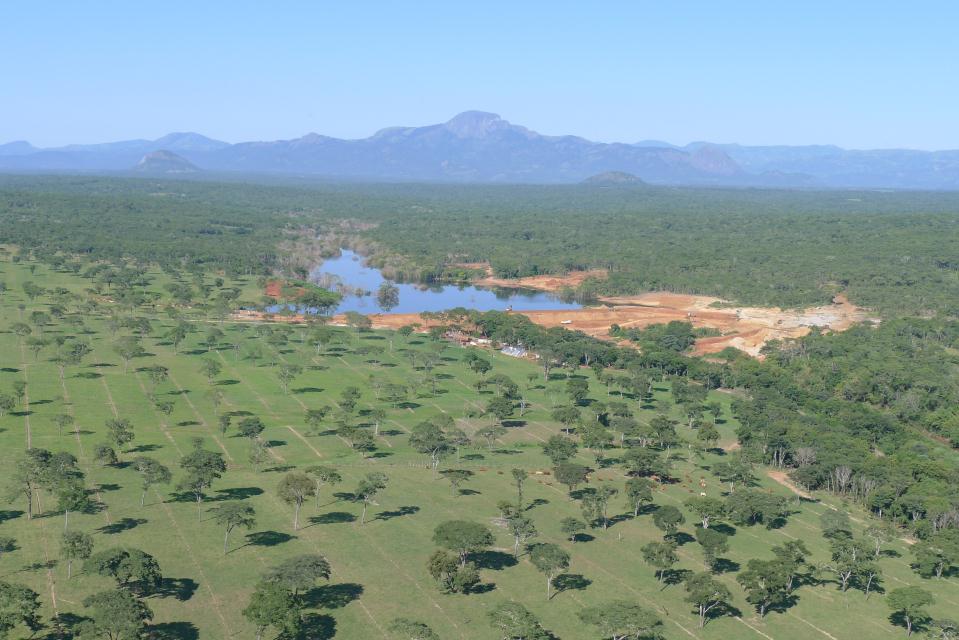
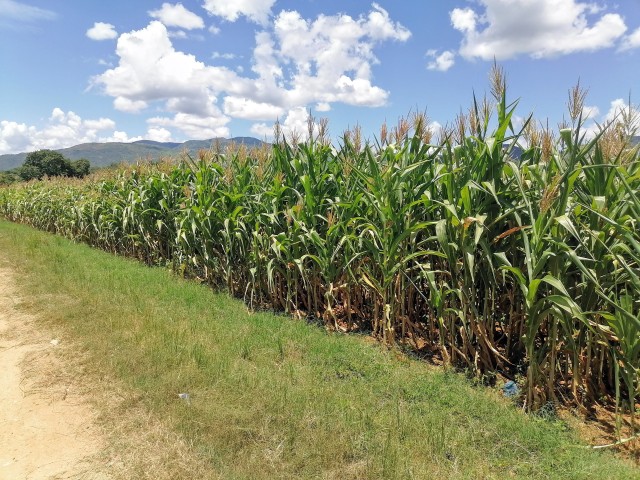
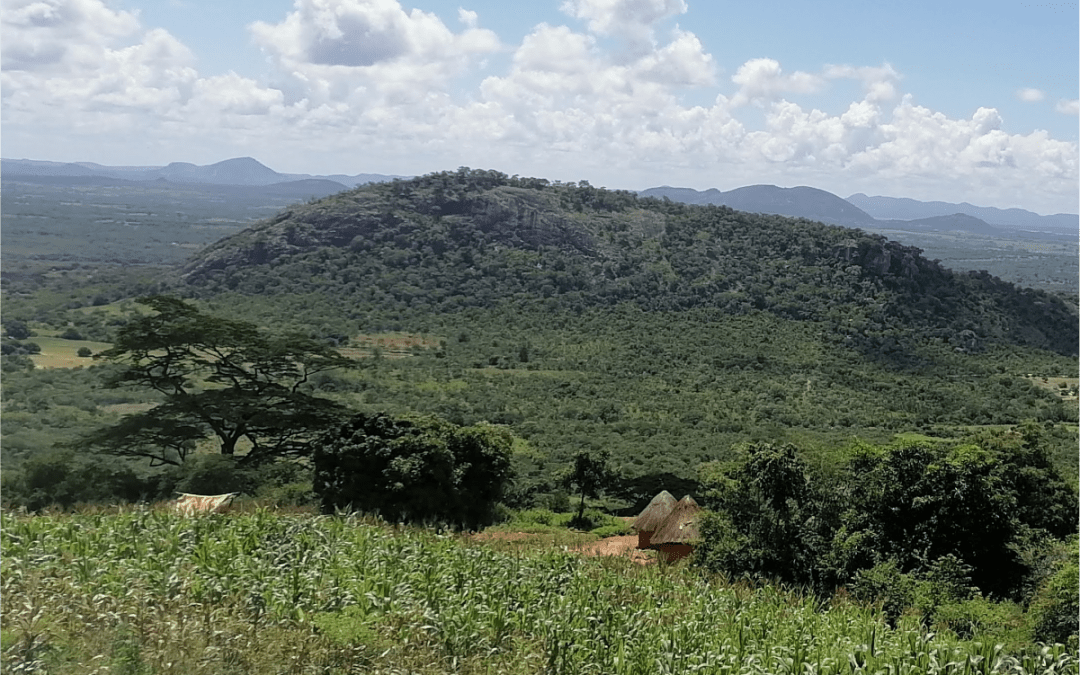
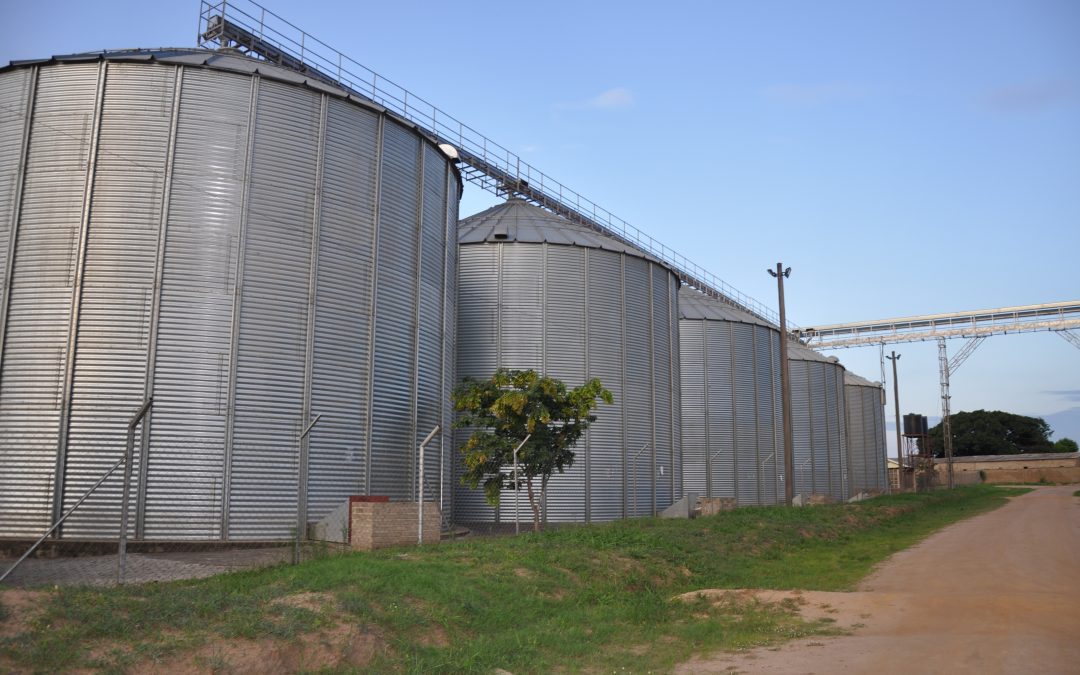

Recent Comments